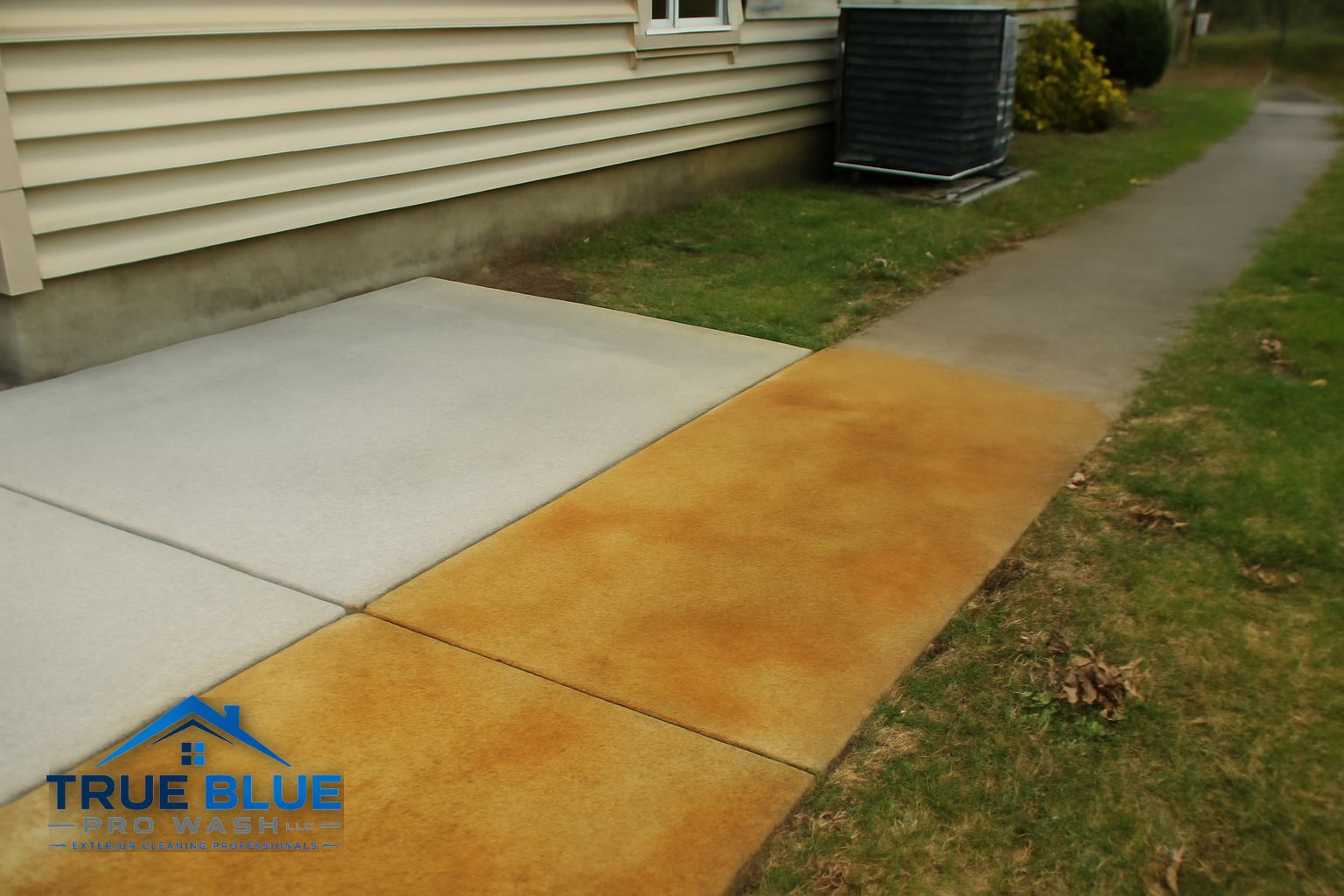
If you live in Wilmington's Highlands, Trolley Square, Westover Hills, or up in Brandywine Hundred, you've probably seen it, that stubborn orange staining creeping across a driveway apron, bleeding down a retaining wall, or streaking the side of a house just below a spigot or downspout bracket. Rust and oxidation stains are one of the most common complaints we hear from homeowners across New Castle County zip codes 19801, 19805, 19806, 19807, and 19810. They look bad, and standard pressure washing alone almost never removes them.
At True Blue Pro Wash, we handle rust and oxidation stain remediation as a dedicated service. That means we're not just blasting water at the problem and hoping for the best. We use professional-grade oxalic and citric acid-based treatments, matched to the specific surface and stain type, so the chemistry does the real work. The result is a clean surface without etching, discoloration, or damage to the material underneath.
Where Rust and Oxidation Stains Come From in the Wilmington Area
Wilmington sits in the Mid-Atlantic, which means hot, humid summers and freeze-thaw winters that are hard on every exterior surface. That weather cycle accelerates oxidation on metal fixtures, aluminum gutters, iron railings, and steel hardware. Here are the most common sources we see on jobs throughout the city and surrounding neighborhoods:
- Irrigation system heads or well water with high iron content leaving orange halos on concrete and brick
- Corroding downspout straps, gutter screws, or metal flashing leaving streaks down siding
- Old cast-iron pipe remnants or buried metal leaching up through walkway slabs
- Fertilizer overspray containing iron that lands on driveways and sidewalks and sets in the sun
- Aluminum siding or gutters chalking and oxidizing, leaving white or gray haze on adjacent surfaces
- Steel patio furniture and planters sitting on concrete patios through wet Delaware summers
In neighborhoods like Greenville (19807) and the Highlands (19806), older homes often have original metal hardware that has been in place for decades. That hardware oxidizes quietly, and by the time the staining becomes visible, it has already set into porous concrete or brick. The sooner you treat it, the easier it comes out.
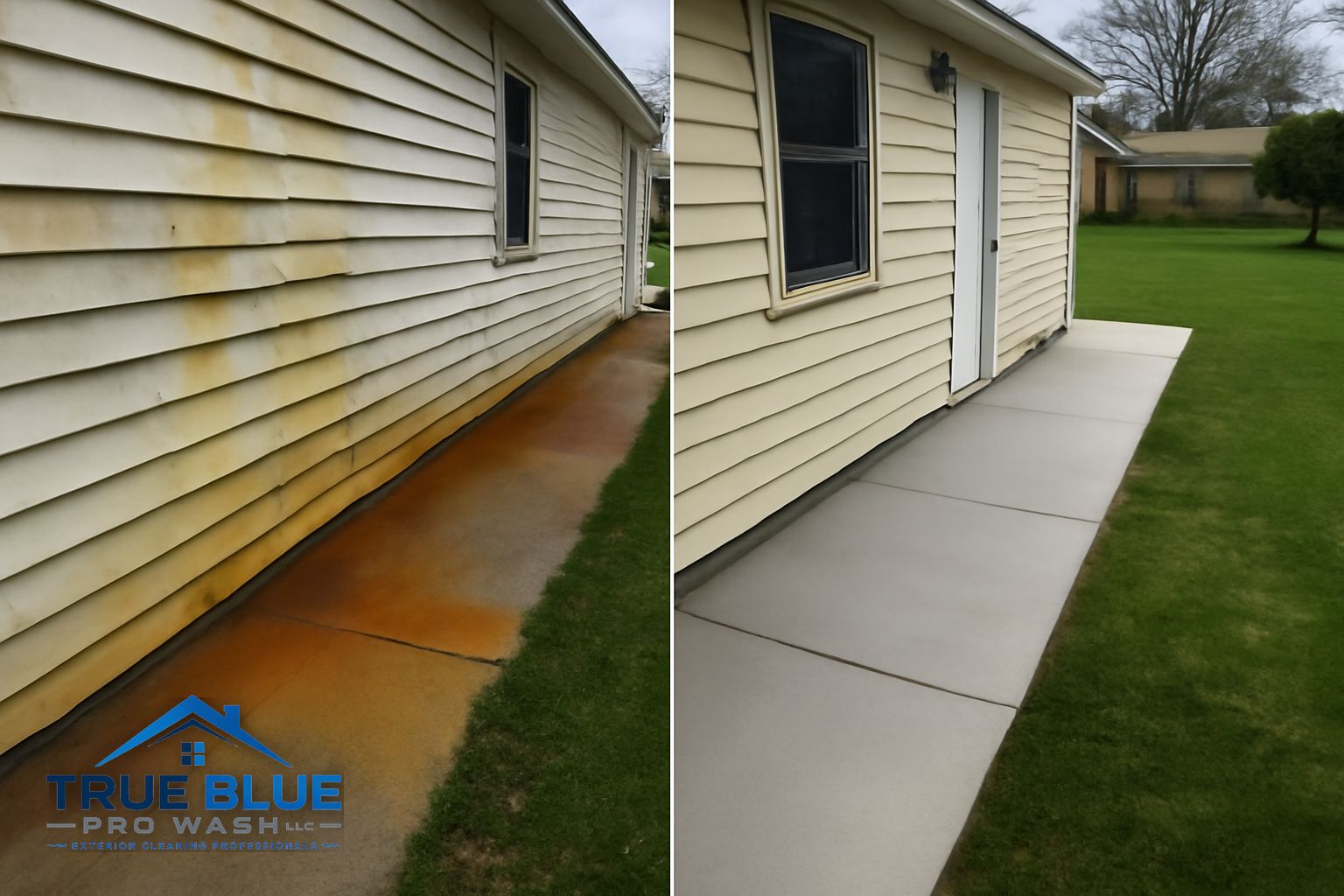
Why Pressure Washing Alone Won't Fix Rust Stains
This is a question we get on nearly every estimate call. A homeowner has already tried renting a pressure washer, or had a crew come out for a general driveway cleaning, and the rust is still sitting there. That's because rust is a chemical bond between iron oxide and the surface material, usually concrete, brick, or mortar. High-pressure water can scour the surface clean of dirt and biological growth, but it cannot break an iron oxide bond. You need the right acid-based chemistry applied at the correct dwell time, followed by a thorough rinse. That's what we bring.
The same logic applies to oxidation hazing on vinyl siding and aluminum trim. That chalky white film is the surface layer of the material breaking down at a molecular level. Scrubbing it with a brush or hitting it with a pressure washer just spreads the chalk and can scratch the surface. Our soft-washing approach uses a low-pressure application of the appropriate treatment chemistry to suspend and lift the oxidation without abrading the material.
Our Rust and Oxidation Stain Remediation Process
Every job starts with a visual assessment of the stain type, the surface material, and the likely source. Treating a rust stain on a stamped concrete patio is different from treating oxidation on painted aluminum siding, and we approach each one accordingly. Here is the general process we follow on a typical Wilmington-area job:
- Pre-rinse the affected area to remove loose debris and surface contamination
- Apply the appropriate acid-based or chelating treatment at low pressure, working it into the stain
- Allow proper dwell time based on stain depth and surface porosity
- Agitate stubborn areas by hand if needed before the rinse phase
- Thoroughly rinse the treated surface and neutralize as needed
- Inspect and re-treat any remaining staining before leaving the job site
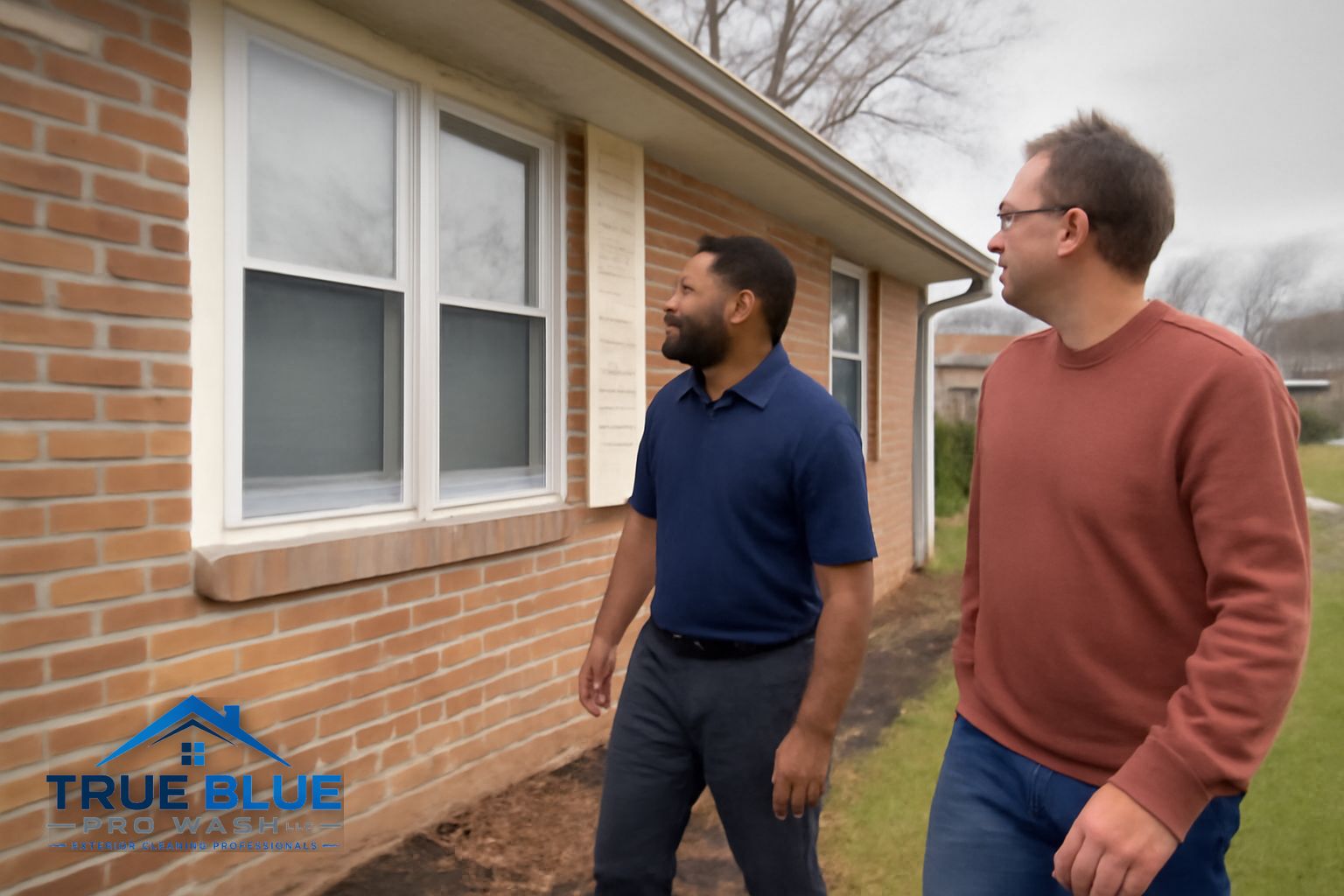
Surfaces We Treat for Rust and Oxidation
- Poured concrete driveways and walkways
- Brick, block, and natural stone surfaces
- Stamped and decorative concrete patios
- Vinyl siding and soffit panels
- Aluminum siding, gutters, and trim
- Stucco and EIFS exteriors
- Painted wood surfaces with oxidation bleed-through
We work throughout Wilmington and the surrounding parts of New Castle County. That includes jobs in Westover Hills along the Pennsylvania border, homes near Brandywine Creek in Brandywine Hundred (19810), and older rowhomes and twin homes in the 19801 and 19805 zip codes closer to downtown. If you're not sure whether we can treat your specific stain or surface, just give us a call at (302) 757-9755 and describe what you're seeing. We'll tell you straight.
Oxidation Haze on Siding: A Growing Problem in Wilmington's Older Stock
Wilmington has a lot of homes built from the 1950s through the 1980s with original aluminum or early-generation vinyl siding. After 30 to 50 years of Mid-Atlantic sun, humidity, and acid rain, the outer layer of that siding oxidizes and chalks. The house starts to look dingy and faded even after a basic wash. Gutter brightening customers often notice this first because the discoloration shows clearly on the front face of white aluminum gutters. The same oxidation is usually present on the siding below.
Our oxidation treatment restores the visual clarity of the surface and removes that chalky film, often making a significant difference in curb appeal without repainting. It's not a permanent fix because the material will continue to oxidize over time, but most homeowners get several years of improved appearance from a single treatment. We often combine this service with a full house soft wash so every surface on the home is addressed in one visit.
Serving Wilmington and New Castle County
True Blue Pro Wash is locally operated and based in the Delaware area. We're not a franchise with a call center in another state, when you call (302) 757-9755, you're talking to someone who knows the difference between a property in the Highlands and one in Westover Hills, and what the soil, water, and weather conditions in each neighborhood do to exterior surfaces. We take rust and oxidation stain calls throughout Wilmington's zip codes and schedule jobs efficiently so we're not leaving you waiting weeks for a crew to show up.
Frequently Asked Questions
Will rust stain treatment damage my concrete or siding?
Not when it's done correctly. We use treatments that are matched to the surface material and apply them at the appropriate concentration and dwell time. We've treated dozens of properties across Wilmington without surface damage. The key is using the right product, not just the strongest one available.
My irrigation system keeps putting iron-rich water on the driveway. Is there any point in treating the stain if it will just come back?
Yes, treating the stain is still worth it, but you're right that it will return if the source isn't addressed. We recommend treating the staining to restore the surface, then working with an irrigation company to install a filter on your system or adjust the heads away from hardscape. We can treat the stain again on a maintenance schedule if needed, many customers in Brandywine Hundred and Greenville do exactly that.
How long does the stain treatment take to work, and when can I use the area again?
Most treatments work within 10 to 20 minutes of application. After we rinse and the surface dries, it's typically ready for foot traffic within an hour or two. Vehicle traffic on a driveway is usually fine by the end of the day. We'll give you a specific timeframe when we're on site based on what we applied.
Can you treat rust stains on a brick retaining wall or front steps?
Yes. Brick and mortar are porous and hold rust stains, but they respond well to the right acid-based treatment. We treat brick surfaces throughout Wilmington's older neighborhoods, including rowhomes and twin homes in the 19801 and 19805 zip codes. We do check mortar condition before treatment because deteriorated joints can be sensitive.
Is the oxidation treatment on aluminum gutters the same as gutter brightening?
They're related but not identical. Gutter brightening specifically addresses the dark tiger-stripe staining that runs down the front face of gutters, those streaks come from oxidized debris washing over the lip. Oxidation treatment addresses the chalky, faded haze on the gutter or siding surface itself. We often do both in the same visit, and we'll tell you which one applies to your situation after a quick look.
Do you offer rust stain treatment as a standalone service, or does it have to be bundled with a full house wash?
We offer it as a standalone service. If you have a specific area, say, a driveway apron with irrigation staining or a section of siding with oxidation haze, we can come out and target just that area. That said, many customers find it makes sense to combine it with a house wash or concrete cleaning since we're already on site and mobilized.