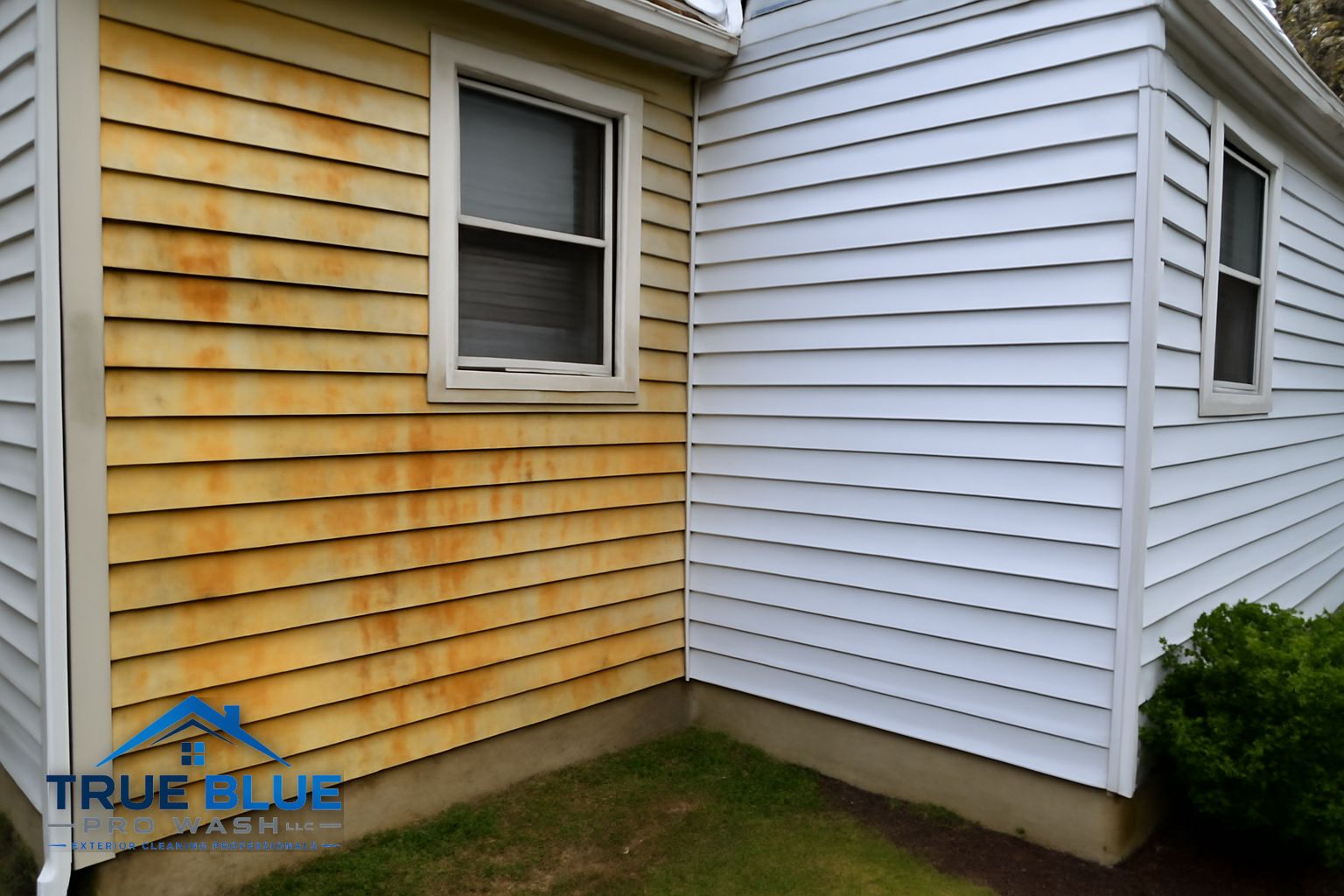
If you live in Wilmington, whether that's the Highlands around 19806, Trolley Square in 19806, Westover Hills in 19807, or the older rowhouse neighborhoods in 19801 and 19805, you've probably noticed orange or brown streaks creeping across your concrete, brick, or vinyl siding at some point. Sometimes it's a rusty irrigation head that's been bleeding iron into your driveway for two summers. Sometimes it's the metal flashing or fasteners on your gutters that have started to oxidize and weep down the fascia. Either way, it looks bad, and a garden hose isn't going to touch it.
True Blue Pro Wash handles rust and oxidation stain remediation throughout Wilmington and the rest of New Castle County. We use professional-grade oxalic and citric acid treatments formulated for exterior surfaces, not the big-box store stuff that leaves a white haze or damages your pavers. The chemistry matters as much as the equipment, and using the wrong product on the wrong surface can etch concrete, strip color from pavers, or streak vinyl siding even worse than the rust did.
Why Wilmington Properties See So Much Rust and Oxidation
The Mid-Atlantic climate is rough on metal components. Wilmington sits in a humid corridor where summer humidity regularly runs above 80 percent, and the freeze-thaw cycles from November through March accelerate corrosion on anything iron or steel. Sprinkler heads and well water with high iron content are the most common culprits for driveway and sidewalk rust staining in zip codes like 19810 up in Brandywine Hundred. In the older Highlands and Trolley Square neighborhoods, it's often cast iron or galvanized downspout hardware, decorative railings, or aged HVAC drain lines that are leaving streaks on brick and concrete below.
Oxidation on aluminum gutters and siding panels is a separate issue. That chalky white or gray film is the breakdown of the surface coating, and it transfers onto your hands, your clothes, and eventually onto the surfaces below as dark tiger-stripe staining. Gutter brightening is part of what we do, but when the oxidation runoff has already stained the soffit, the brick, or the driveway, that surface needs its own targeted treatment before any cleaning or painting work makes sense.
What We Treat and How We Do It
Rust Stains on Concrete, Brick, and Pavers
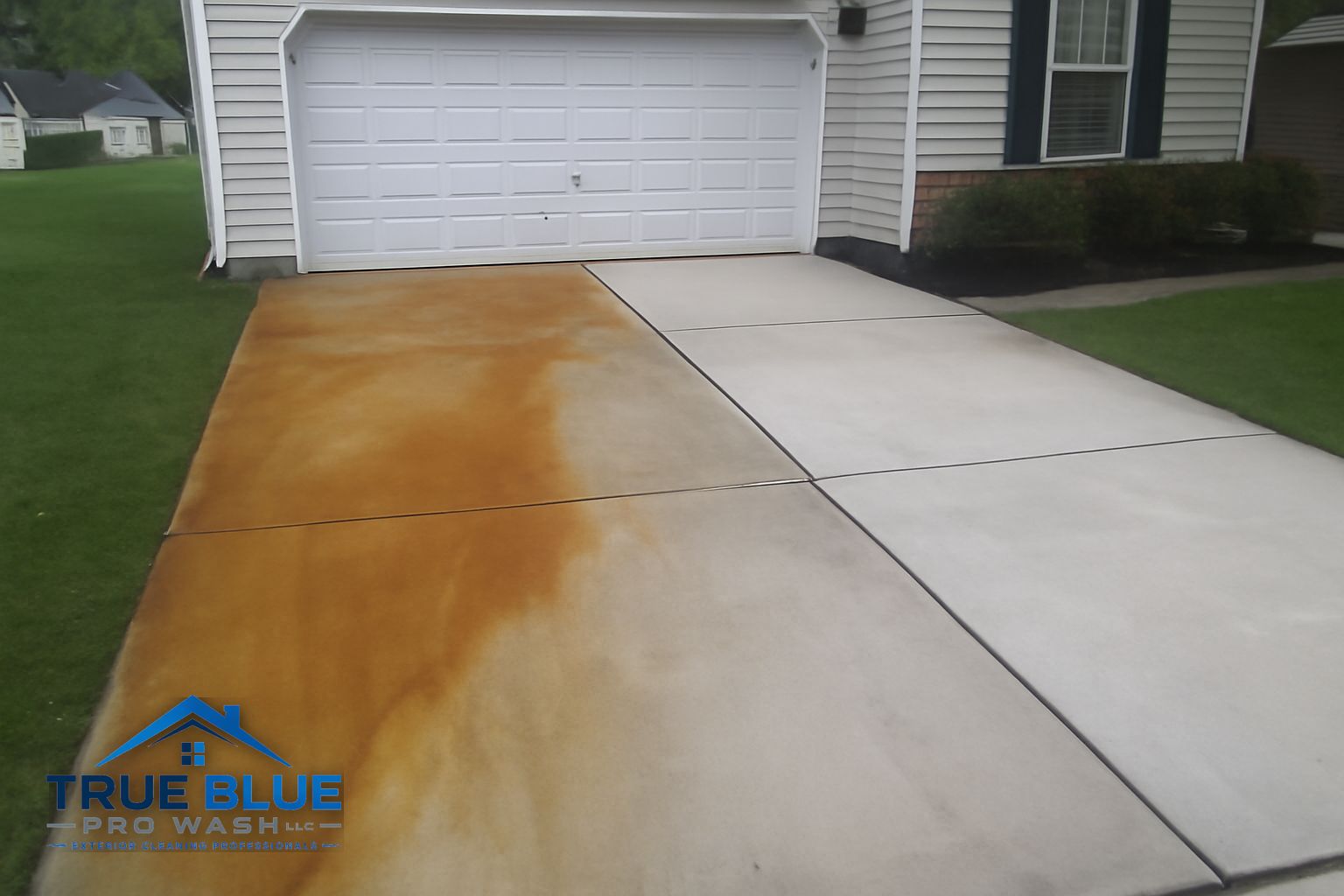
Driveways and sidewalks in Westover Hills and Greenville often feature decorative concrete or natural stone pavers that can't take aggressive pressure washing. We apply a dwell-time rust treatment, let the chemistry break the iron oxide bond, then rinse at controlled pressure so we're lifting the stain, not grinding it in or etching the surface. For plain poured concrete in higher-traffic areas, we follow up with a low-pressure rinse to flush everything clean.
Oxidation and Tiger-Stripe Staining on Gutters and Siding
Aluminum gutters that haven't been cleaned or brightened in a few years develop that oxidized chalky coating, and the runoff from it stains the siding below in dark vertical stripes. We apply a gutter brightener formulated for aluminum, agitate it by hand along the face of the gutter, then rinse clean. For siding oxidation, we use a low-pressure soft wash approach, same type of chemistry we use on house washing jobs, so we're not forcing water behind panels or into seams.
- Iron and rust stains from irrigation heads, well water, or corroded metal hardware on concrete and pavers
- Oxidation tiger-stripe staining running down aluminum gutters onto brick or vinyl siding
- Rust bleeding from deck screws, railings, or HVAC components onto wood decking or concrete below
- Fertilizer-based rust staining on walkways and driveways (common in Brandywine Hundred, 19810)
- Rust halos around downspout splash blocks or metal edging on landscape beds
Neighborhoods We Serve in Wilmington
We work throughout the city and surrounding areas. In the Highlands and Trolley Square (19806), we see a lot of older homes with cast iron components and aging gutters that have been dripping oxidation onto historic brick for years. In Westover Hills and Greenville (19807), larger properties with irrigation systems and decorative stone driveways deal with iron staining from both the sprinkler heads and the region's naturally iron-rich groundwater. Up in Brandywine Hundred (19810), newer subdivisions still get hit with fertilizer rust from lawn care programs, that orange haze on a two-year-old concrete driveway is almost always a fertilizer iron stain, not a plumbing issue. And in the older 19801 and 19805 zip codes, rowhouse stoops and brick sidewalks pick up rust from painted iron railings that have lost their protective coating.
Do You Need to Fix the Source Before Cleaning?
Honestly, yes, if we remove rust stains and the irrigation head or metal fastener that caused them is still in place and still leaching iron, you'll be looking at the same problem in six to twelve months. We'll point out what we see when we're on site, but we're not plumbers or landscapers. What we can tell you is whether the staining pattern suggests a recurring point source or a one-time event. If it's recurring, addressing the source before you spend money on stain removal is the smarter play. If it's a one-time stain, a spilled fertilizer bag, a removed railing, a replaced downspout, then cleaning it now makes complete sense and the results will last.
A Note on DIY Rust Removers
We get asked all the time whether homeowners can handle this themselves. Some light fertilizer staining on plain concrete? A consumer-grade oxalic acid product might get most of it off. But for anything on pavers, brick, or vinyl siding, or for staining that's been sitting for more than one season, off-the-shelf products usually fall short and sometimes make things worse. Muriatic acid, which some people try, will etch concrete, damage grout joints in pavers, and strip the color from brick mortar. If you're not sure, it's worth a phone call to us at (302) 757-9755 before you experiment.
What to Expect When You Book a Rust Removal Job
- We assess the staining type, surface, and likely source on arrival before applying any chemistry
- Treatment dwell times vary by stain age and surface porosity, we don't rush the process
- All runoff is contained and neutralized where required by the surface type
- We'll photograph the before and after and walk you through the result before we pack up
- If a second application is needed on older or deeply set stains, we'll tell you upfront, no surprise charges
Serving Wilmington and Beyond
Beyond Wilmington, True Blue Pro Wash handles rust and oxidation stain removal across New Castle County and into Southeast Pennsylvania and Southwest New Jersey. If you're in Newark, Bear, Middletown, Hockessin, Chadds Ford, West Chester, Kennett Square, or over in Penns Grove and Pennsville, give us a call at (302) 757-9755. One quote, no commitment, and we'll tell you straight whether the stain is something we can fix and what it's going to take to do it right.
Frequently Asked Questions
What causes orange rust stains on my Wilmington driveway or sidewalk?
The most common causes are iron-rich irrigation water, corroded metal hardware like railings or HVAC drain pans, and fertilizers that contain iron sulfate. Wilmington's groundwater in some areas, particularly in Brandywine Hundred and parts of Greenville, has naturally elevated iron content that shows up as orange staining wherever sprinklers regularly hit concrete or pavers.
Will rust stain removal damage my pavers or brick?
Not when the right product is used at the right dilution and dwell time. The risk comes from using muriatic acid or high-concentration products on polished or colored pavers and historic brick, which can etch surfaces or strip color. We use professional oxalic and citric acid formulations sized for each surface type, so we're lifting the stain without damaging what's underneath.
What are the tiger stripes running down my gutters, and can you remove them?
Those dark vertical streaks are oxidation runoff from the surface coating of your aluminum gutters breaking down. The gutter itself drips the oxidized material down its face and onto the siding or brick below. We use a dedicated gutter brightener to strip the oxidation from the gutter face and a soft wash treatment to clean the staining off whatever surface below was affected.
How long does rust stain removal last?
If the source of the rust is eliminated, the results last indefinitely, we're removing the existing stain, not sealing over it. If the source is still active, like a sprinkler head that's still running iron-rich water across your driveway, the staining will return within one to two seasons. We'll let you know what we observe about the source when we're on site.
Do you handle rust stains on vinyl siding, not just concrete?
Yes. Rust from corroded screws, metal fixtures, or oxidized gutters can streak down vinyl siding just like it does on concrete. We treat siding staining with a soft wash approach, low pressure, targeted chemistry, so we're not forcing water behind panels or into seams around windows and doors.
How do I get a quote for rust stain removal in Wilmington?
Call us at (302) 757-9755 or use the quote form on our site. We serve all Wilmington zip codes including 19801, 19805, 19806, 19807, and 19810, and we can usually get out for an estimate within a few days. We'll look at the staining in person, identify the likely source, and give you a straight number with no obligation.