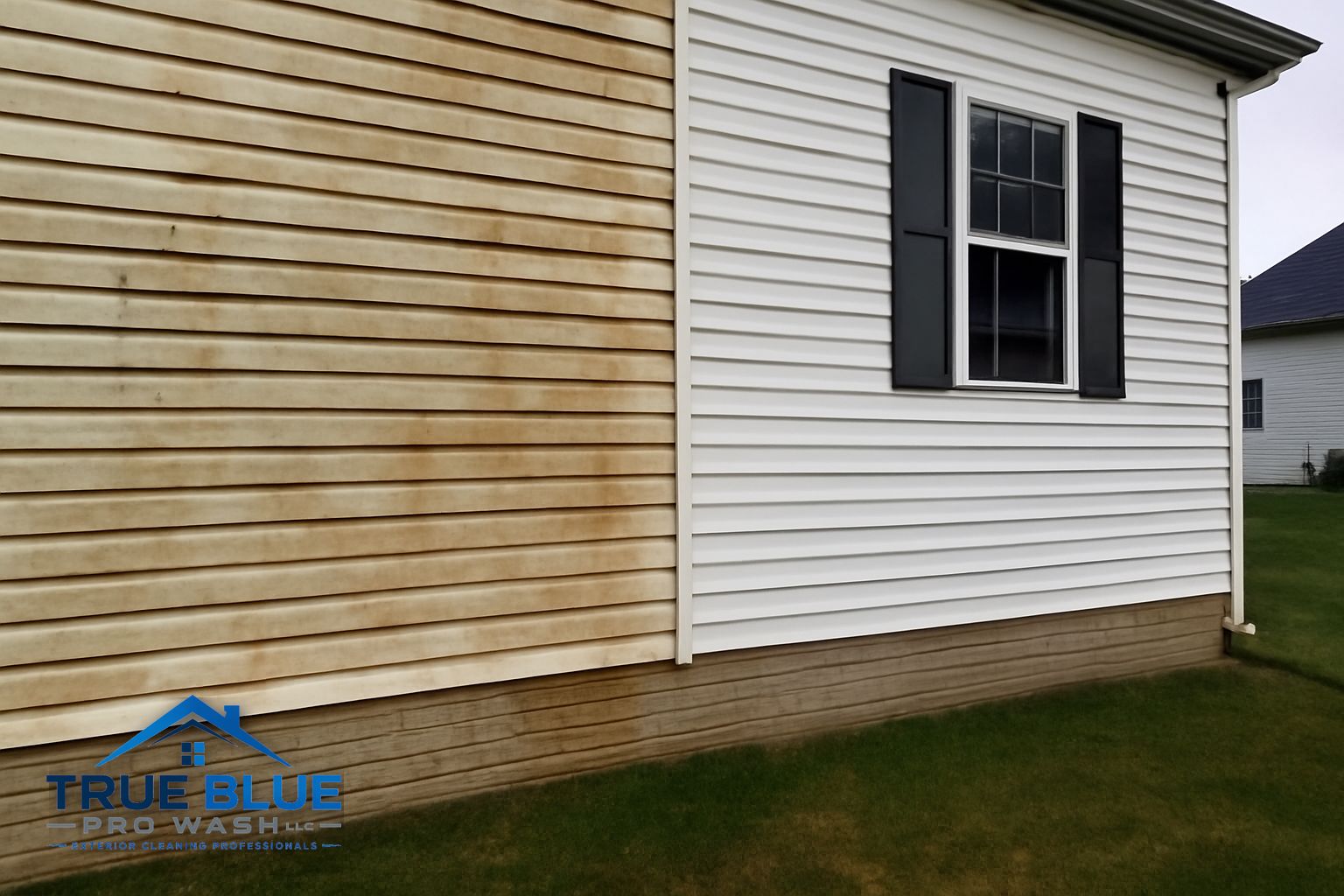
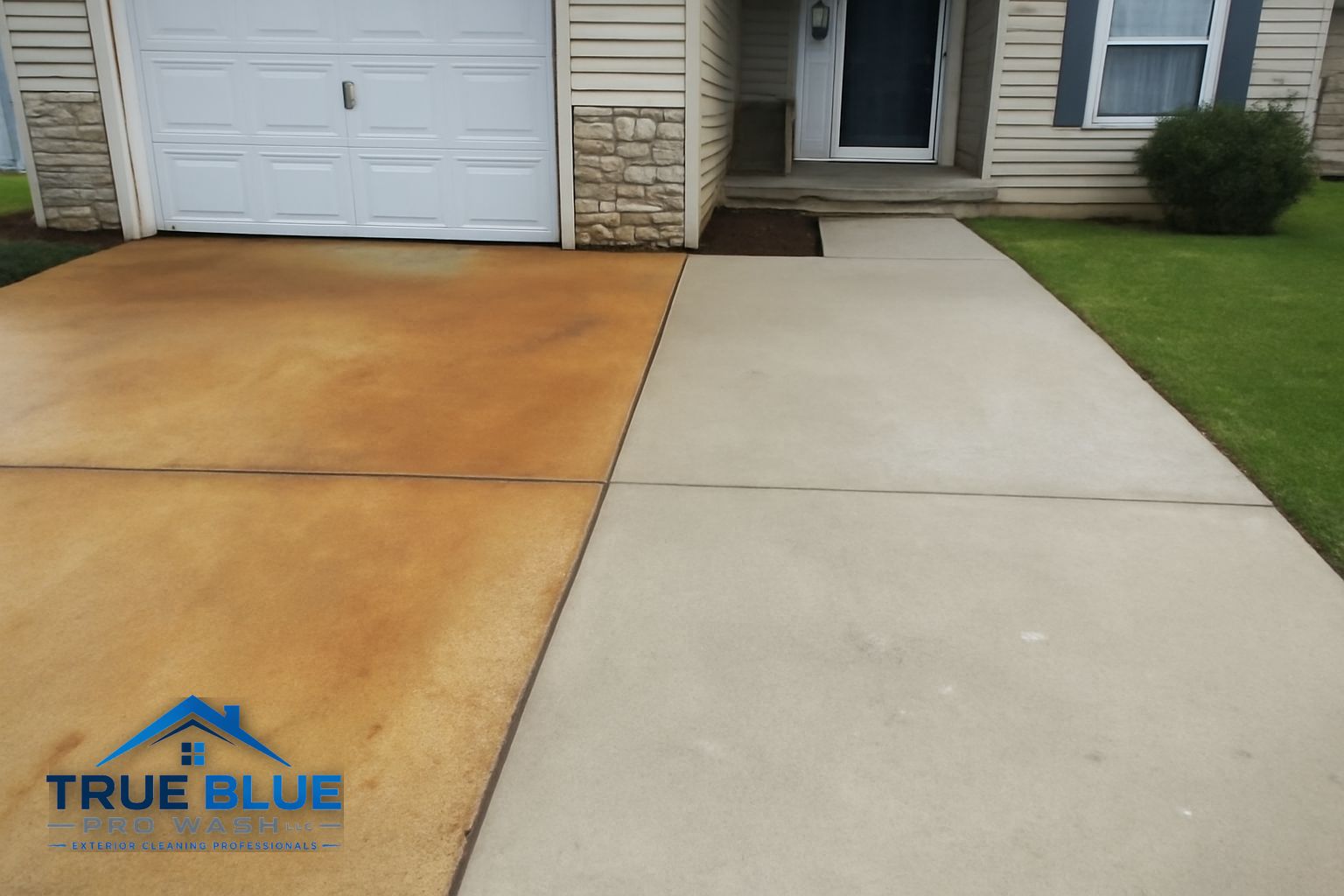
If you live in Bear or Glasgow, Delaware, you've probably seen it: those ugly orange or brown streaks running down a driveway, a concrete stoop, vinyl siding, or a brick retaining wall. Sometimes it comes from a rusty well head or irrigation system. Sometimes it's from fertilizer with high iron content hitting wet concrete. Sometimes it's oxidation bleeding off aluminum gutters or metal fixtures. Whatever the source, rust and oxidation stains are one of the most stubborn messes a pressure washer alone won't fix, and in the 19701 zip code, where a lot of homes sit on iron-rich soil near the Christina River corridor, we see this problem constantly.
True Blue Pro Wash serves Bear, Glasgow, and the surrounding New Castle County area with targeted rust and oxidation stain remediation. We're not just blasting concrete and hoping for the best. We use professional-grade oxalic and citric acid-based treatments formulated specifically for iron and oxidation staining. The chemistry does the heavy lifting, and pressure or soft-wash rinsing finishes the job clean. Most surfaces come back looking like the stain was never there.
Why Rust Stains Are So Common in Bear and Glasgow
Bear and Glasgow sit in a part of New Castle County where the soil has a naturally elevated iron content. Combine that with the Mid-Atlantic's humid summers, heavy spring rain, and the kind of freeze-thaw winters that crack concrete and loosen mortar, and you've got ideal conditions for rust staining year after year. Here are the most common sources we find on properties along Governor Printz Boulevard, Old Baltimore Pike, and in subdivisions like Fox Run, Brennan Estates, and the Glasgow area near Route 40.
- Well water irrigation systems: Iron-laden water sprays onto driveways, sidewalks, and siding every week during the growing season, leaving orange trails that build up over time.
- Fertilizer bleed: High-iron lawn fertilizers that get watered in or rained on before they're fully absorbed leave streaks on adjacent concrete and paver surfaces.
- Oxidizing metal fixtures: Gutters, downspout brackets, railings, and HVAC support hardware all oxidize and bleed rust-colored staining onto whatever surface sits below them.
- Rusty vehicles and equipment: Oil drips and rust flaking from older vehicles, lawn equipment, or trailers parked on concrete driveways leave iron deposits that bond to the surface.
- Metal edging and landscape hardware: Decorative metal landscape edging and raised garden bed hardware corrodes and stains adjacent concrete or pavers with each rain cycle.
What We Actually Do: The Rust Remediation Process
We hear from homeowners all the time who tried scrubbing rust stains with bleach, dish soap, or even over-the-counter rust removers from a big box store. Those products can help with very light surface staining, but once iron has bonded into the pores of concrete, pavers, or textured vinyl siding, you need a professional-strength chelating agent to lift it out. Here's our process for properties in Bear and Glasgow.
Step 1: Source Identification
Before we treat anything, we figure out where the rust is coming from. If a leaking irrigation head or a corroded gutter bracket is the source and we don't address it, the stain will come right back within a season. We walk the property with you and point out the culprits. Sometimes fixing a single drip emitter saves you from needing annual stain treatments.
Step 2: Surface-Appropriate Chemical Application
Different surfaces require different approaches. Concrete driveways and sidewalks tolerate a stronger oxalic acid application and a moderate-pressure rinse. Vinyl siding and painted surfaces need a gentler citric-based treatment applied with a low-pressure soft wash technique so we don't drive the staining deeper or damage the finish. Brick and natural stone need the most careful approach because harsh acids can etch the surface if left too long or applied too aggressively.
Step 3: Dwell Time and Agitation
The chemical treatment needs time to break the iron bond. We monitor dwell time carefully, especially in summer heat when product evaporation speeds up. For stubborn staining on rough-broom-finish concrete common in Bear subdivision driveways, light agitation with a stiff brush helps work the product into the texture before the final rinse.
Step 4: High-Volume Rinse and Inspection
We rinse thoroughly and then walk the surface with you before we pack up. If a spot needs a second pass, we do it on the same visit. We'd rather spend an extra twenty minutes getting it right than leave a homeowner on Glasgow Avenue or in the Fox Run neighborhood with a surface that's only halfway clean.
Oxidation Staining: A Different Problem, Same Solution
Oxidation staining is close cousins with rust staining but comes from a slightly different source. In Bear and Glasgow, we see it most often as dark gray or black streaking on vinyl siding directly below aluminum gutters that have started to oxidize. You'll also find it on painted metal railings, HVAC pad surrounds, and older steel garage doors. The oxidized metal breaks down and gets carried by rain water onto whatever surface is below. Left alone, the staining can become a permanent gray ghost on white or light-colored siding that no amount of regular house washing will fully remove. Our oxidation treatment neutralizes the metal compounds and lifts them off the surface without scrubbing that could leave scratches or swirl marks in the vinyl.
Gutter Brightening: The Often-Missed Source of Oxidation
If your gutters have dark vertical streaks running down the outside face, often called tiger stripes, that's oxidation from the gutter surface itself. Gutter brightening is a service we regularly pair with rust and oxidation stain remediation on Bear and Glasgow properties because fixing the staining on the siding while leaving oxidizing gutters in place is a short-term fix. We apply a gutter-specific brightening solution that removes the tiger stripes from the gutter face and neutralizes the oxidation so the streaking slows back down significantly. It's a good add-on to any rust or oxidation job and one that most homeowners in the 19701 zip code don't even know is an option until we point to their gutters.
Neighborhoods and Areas We Cover Near Bear and Glasgow
Our team works throughout Bear, Glasgow, and the broader 19701 area on a regular basis. If you're in one of the following communities, getting us out for a free estimate is easy and usually fast, we run routes through this part of New Castle County multiple times a week.
- Fox Run and Fox Run Commons along Rt. 40
- Brennan Estates and Brennan Manor near Old Baltimore Pike
- Caravel Farm and Caravel Farms neighborhoods
- Glasgow and the Rt. 896 corridor near Glasgow High School
- Harmony Woods and Harmony Hills
- Communities off Governor Printz Boulevard and Airport Road
- Suburban neighborhoods near the Bear YMCA and the Glasgow Park athletic complex
How to Get a Quote for Rust or Oxidation Stain Removal in Bear
The fastest way to get an accurate price is to call us directly at (302) 757-9755. Rust stain jobs are harder to quote by square footage alone because the severity and the surface type both affect the process and the product cost. We prefer to take a look, or at minimum see a couple of photos you can text us. Most rust and oxidation stain jobs on residential properties in Bear and Glasgow run anywhere from a single-surface spot treatment to a full exterior remediation pass, and we'll give you a straight number before we start anything.
Frequently Asked Questions
Will regular pressure washing remove rust stains from my driveway in Bear, DE?
Usually not on its own. Pressure washing removes loose dirt and surface grime well, but iron rust staining bonds into the pores of concrete and masonry. You need a chelating chemical treatment, typically oxalic or citric acid-based, to break that bond before the rinse can carry the staining away. We apply the right product first, then rinse, which is why our results look different from a standard pressure wash.
How long does rust stain remediation take on a typical Bear or Glasgow property?
Most single-surface jobs, a driveway, a stoop, or a section of siding, take one to two hours including setup, treatment dwell time, and rinse. Larger jobs covering multiple surfaces or very heavy staining buildup may run three to four hours. We give you a realistic time estimate when we quote the job.
The rust stain on my siding keeps coming back every year. What can I do?
That means the source is still active, most likely an irrigation system with iron-rich well water, a corroding metal fixture directly above, or a slow drip from a rusty gutter bracket. We'll identify the source when we're on site. Treating the stain without fixing or replacing the source is a temporary fix at best. Sometimes a simple drip emitter swap or a gutter bracket replacement stops the cycle completely.
Is your rust treatment safe for the plants and landscaping around my foundation in 19701?
Yes, with proper precautions. Oxalic and citric acid treatments are targeted and we pre-wet surrounding plant material before application and rinse thoroughly after. We've done hundreds of jobs in landscaped Bear and Glasgow yards without plant damage. We'll flag anything that needs extra care before we start.
Can you remove oxidation tiger stripes from my gutters at the same time as the rust treatment?
Absolutely, and we recommend it when both issues are present. Gutter brightening uses a separate product applied to the outside face of the gutter to dissolve the oxidized streaking. Pairing it with rust or oxidation stain remediation on the same visit saves you a separate service call and makes the whole exterior look dramatically cleaner at once.
Do you serve areas beyond Bear and Glasgow in New Castle County?
Yes. True Blue Pro Wash covers all of New Castle County including Wilmington, Newark, Hockessin, Middletown, and New Castle, as well as parts of Southeast Pennsylvania and Southwest New Jersey. Call us at (302) 757-9755 and we'll confirm coverage for your specific address.