If you drive through Bear or Glasgow in New Castle County and look up at the rooftops, you will see the same thing on house after house: dark gray or black streaks running down the shingles from the ridge to the eaves. Most homeowners assume it is mildew, pollution, or just the shingles aging. It is none of those things. What you are looking at is Gloeocapsa magma, a cyanobacterium that feeds on the limestone filler in asphalt shingles and spreads from roof to roof on wind, birds, and squirrels. Here in Bear, zip code 19701, the combination of humid Mid-Atlantic summers and tree canopy cover gives that algae exactly what it needs to thrive. Left alone, it shortens shingle life, raises cooling bills by reducing reflectivity, and can void manufacturer warranties.
True Blue Pro Wash uses low-pressure soft washing to clear Gloeocapsa magma and every other biological growth off your roof without lifting a single granule from your shingles. High-pressure washing on shingles is the single fastest way to destroy them. Soft washing applies a professional-grade, biodegradable algaecide solution at low PSI, lets the chemistry do the killing, and rinses clean. The algae, moss, and lichen die at the root so they do not come back in six weeks the way a pure-water rinse would allow. Most Bear and Glasgow homeowners see results that hold for two to four years depending on shade and tree coverage around the home.
Why Bear and Glasgow Roofs Streak So Fast
Bear, DE sits right in the moisture corridor between the Christina River basin and the Chesapeake and Delaware Canal. That means warm, wet air hangs around longer than it does in drier inland areas. Add the tree canopy in subdivisions like Caravel Farms, Red Lion Chase, and Brennan Estates, and north-facing roof slopes stay damp well past noon on a summer day. Gloeocapsa magma loves exactly that environment. It establishes on the north slope first, then migrates over the ridge. By the time you see black streaks on the front-facing slope, the back of the roof is usually much worse. Glasgow, just to the northwest along Route 40, has similar conditions with a lot of colonials and split-levels built in the 1980s and 1990s whose shingles are already in the second half of their service life.
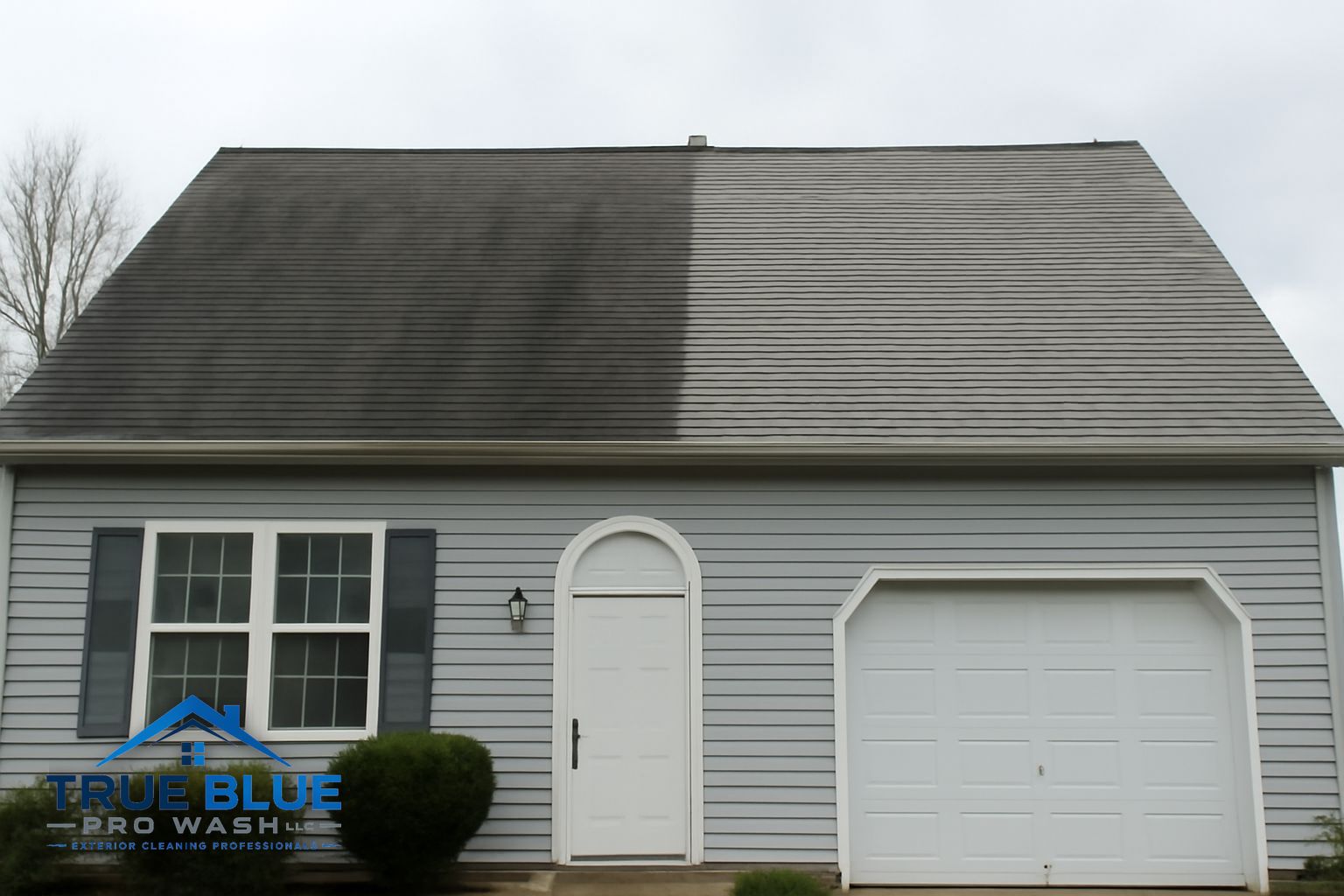
What Our Roof Soft Washing Process Looks Like
We keep the process straightforward. A technician walks the property, checks gutters for debris that could block runoff during the rinse, and pre-wets any plantings near the foundation. We mix our solution on-site to match the growth level we are dealing with. Application is done from the ground or from a ladder with a dedicated low-pressure soft-wash system, never a standard pressure washer cranked down. Dwell time is roughly ten to fifteen minutes. Then we rinse from the ridge down so dirty runoff always moves away from cleaned areas. When we leave, your shingles are intact, your landscaping is unharmed, and the algae is dead, not just rinsed off to regrow.
Signs Your Bear Home Needs Roof Soft Washing Now
- Dark gray or black vertical streaks running down shingles from ridge to eave
- Green or dark patches on the north-facing slope that look like moss or lichen
- Shingles that appear darker than when the roof was new, especially in shaded areas
- A second-story interior that feels warmer than usual in summer due to reduced shingle reflectivity
- A neighbor on your street who recently had their roof replaced and yours was installed around the same time
- You are planning to sell and want the home to show well from the curb
Freeze-Thaw and Pollen: The Bear DE Roof Double Hit
Bear homeowners get hit twice a year beyond just summer algae growth. Spring pollen season coats roofs in a thick yellow film that feeds biological growth as it breaks down. Then from November through March, freeze-thaw cycles crack and lift any growth that has worked its way under shingle edges. Moss and lichen rhizoids are the worst offenders here. They anchor into the shingle surface and when water trapped underneath freezes, it pries the mat away from the shingle, taking granules with it. Soft washing in late summer or early fall kills that growth before winter sets in, protecting your roof through the cold months and reducing the debris load on your gutters when spring arrives.
Neighborhoods and Zip Codes We Cover Around Bear
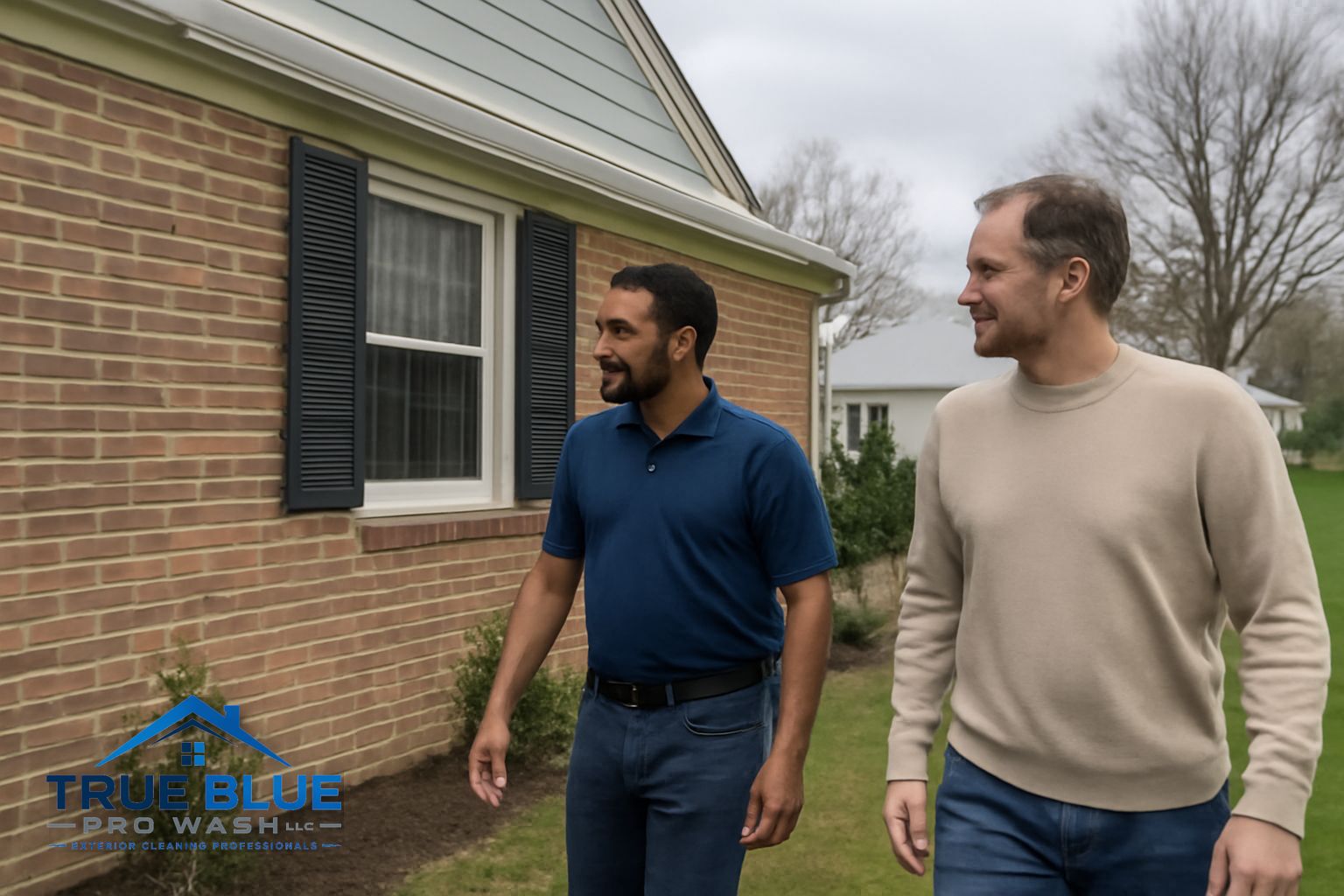
Our crew runs jobs throughout Bear 19701 and the surrounding Glasgow area on a regular rotation. We work in Brennan Estates, Caravel Farms, Red Lion Chase, Fox Run, Independence, and down Route 7 toward the Chesapeake and Delaware Canal corridor. We also connect to neighboring service zones in Newark 19711 and 19713 to the west and New Castle 19720 to the north, so if you have a neighbor or a family member across town, we can often schedule back-to-back jobs and pass the savings along. One call to (302) 757-9755 gets you a real person who knows Bear and can give you a straight answer about what your roof needs.
How Roof Soft Washing Compares to Replacement
A full shingle replacement in New Castle County runs anywhere from eight thousand to twenty thousand dollars depending on the size and pitch of the roof. A professional soft wash from True Blue Pro Wash is a fraction of that cost and, when done on a roof that still has structural life left in the shingles, extends that life meaningfully. The Asphalt Roofing Manufacturers Association specifically recommends low-pressure chemical cleaning for algae removal and warns against high-pressure washing. If your roof passed inspection when you bought the house and the shingles are not curling or missing, there is a very good chance soft washing is all you need. We will tell you honestly if we see something during our walkthrough that suggests a bigger problem.
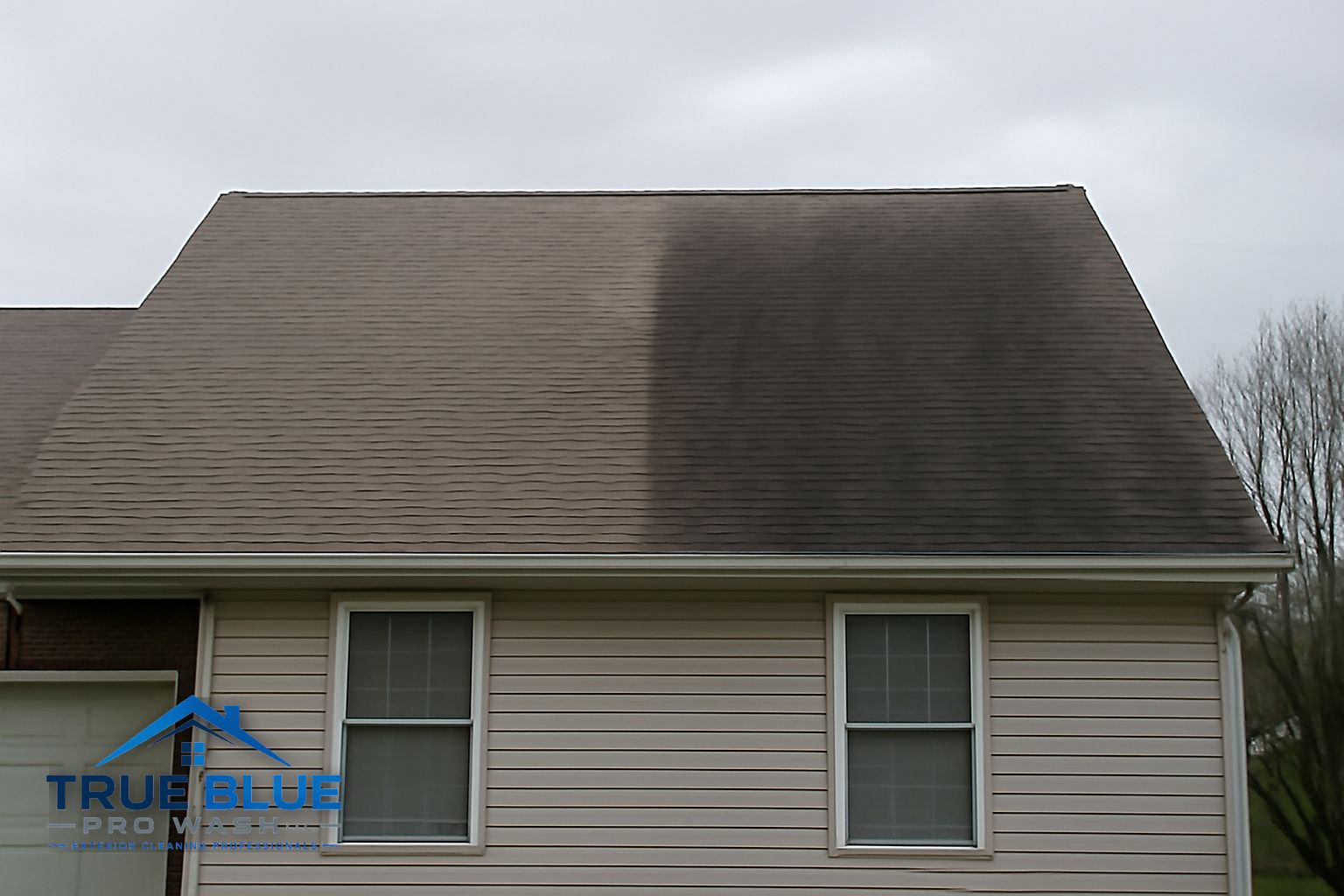
Book Your Bear DE Roof Soft Wash
True Blue Pro Wash is based right here in the Wilmington and New Castle County area. We are not a national franchise dispatching strangers. We know Bear, we know what grows on roofs in 19701, and we stand behind our work. Call (302) 757-9755 to schedule a free on-site estimate or to get a ballpark quote over the phone based on your roof's square footage and pitch. We typically schedule Bear and Glasgow jobs within one to two weeks of booking, and we always confirm the day before.
Frequently Asked Questions
Will soft washing damage my shingles or void my roof warranty?
No. Soft washing uses low pressure, well below what would lift shingle granules. The Asphalt Roofing Manufacturers Association endorses low-pressure chemical cleaning as the correct method for algae removal. High-pressure washing is what voids warranties, which is why we never use it on shingles.
How long does roof soft washing last on a Bear, DE home?
Most homeowners in Bear and Glasgow see results hold for two to four years. Homes with heavy tree canopy on north-facing slopes may need treatment closer to the two-year mark. Homes with good sun exposure often go three years or longer before significant regrowth appears.
Is the soft wash solution safe for my landscaping and pets?
Yes, when applied correctly. We pre-wet all plantings near the foundation before we start and rinse them again after the roof rinse. We use biodegradable surfactants and keep pets and people off the wet areas until the solution has rinsed and dried, which usually takes less than an hour.
How do I know if those dark streaks are Gloeocapsa magma or something else?
True dark streaks running vertically down the shingle face from ridge toward eave are almost always Gloeocapsa magma algae. Green patches that look raised or fuzzy are moss or lichen. Flat gray-green growth that hugs the shingle surface closely is usually algae as well. All of these respond to soft washing. If you are unsure, call us at (302) 757-9755 and we can walk you through what to look for before we even schedule a visit.
Do you serve Glasgow and nearby neighborhoods in the same trip as Bear?
Yes. Glasgow falls right in our Bear 19701 service zone. We regularly run routes that cover Brennan Estates, Caravel Farms, Fox Run, and Glasgow in the same day. If you have a neighbor who also needs service, let us know when you book and we will try to schedule both on the same run.
What is the best time of year to soft wash a roof in Bear, Delaware?
Late summer through early fall is ideal. Algae growth peaks in July and August, so treating in August or September kills the growth at its heaviest before the freeze-thaw season starts. That protects the shingles through winter and reduces organic debris loading on your gutters. Spring works too, but you are treating growth that has had all summer to establish, which sometimes requires a second application on heavily affected roofs.