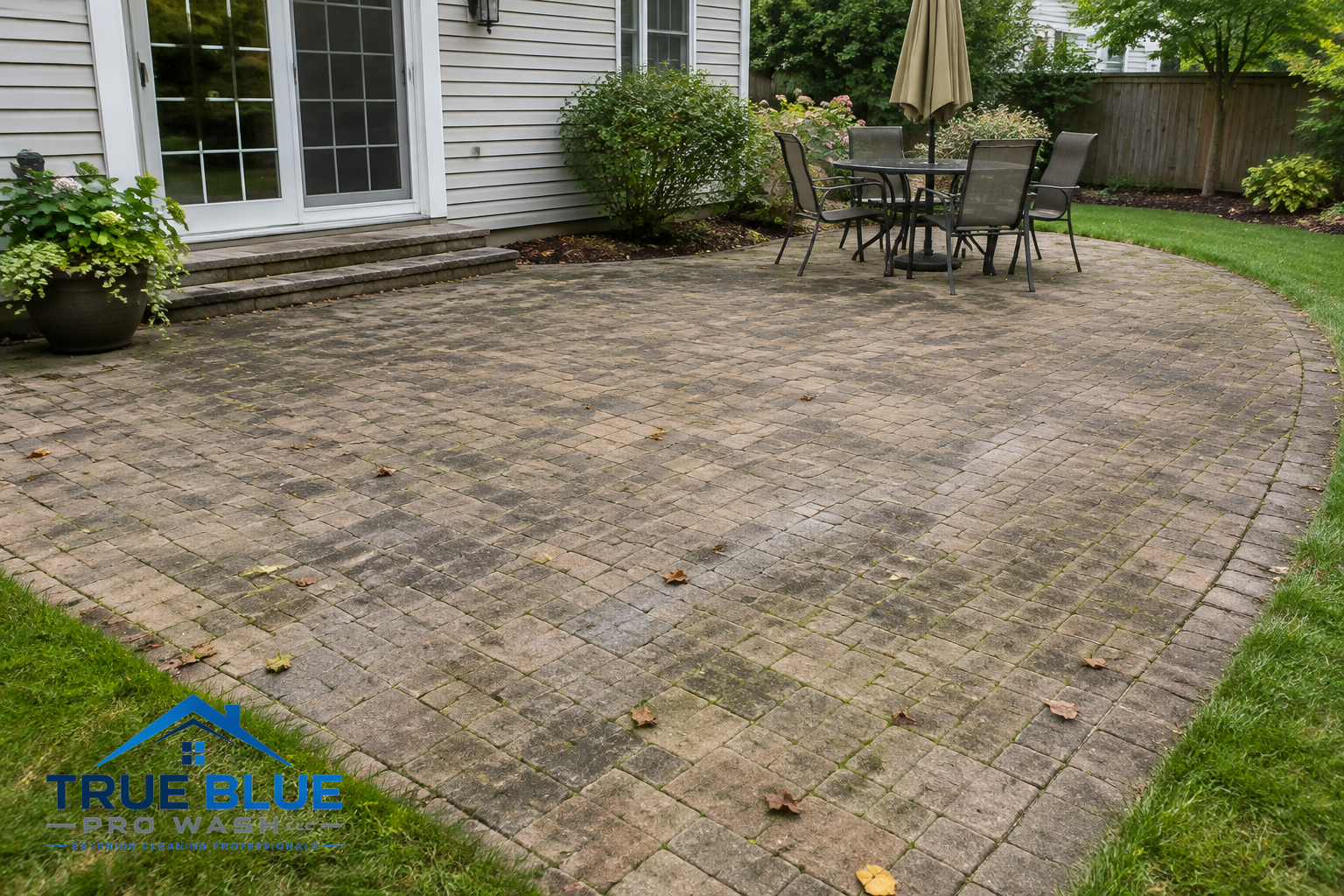
Paver Cleaning or Repair First in Newark, DE?
If your Newark paver patio has uneven stones, loose edges or joints that are losing material, discuss those conditions before arranging cleaning. Surface dirt alone may be a cleaning concern, but movement or displaced pavers call for an assessment of the installation first. Cleaning does not level stones, rebuild a base or resolve drainage problems.
True Blue Pro Wash offers concrete and paver cleaning in Newark. This guide helps you separate a cleaning request from concerns that may need a paver repair professional. The condition checks below are general guidance, not problems unique to Newark or a diagnosis of your patio.
Separate surface buildup from changes in the patio
Dirt, leaf debris and visible growth on otherwise even pavers are reasons to discuss cleaning. Describe what you see rather than assuming every dark mark has the same cause or will disappear with washing.
Raised corners, sunken sections, cracked stones, widening gaps or an edge that has spread outward are different concerns. If you have already noticed stones rocking underfoot, report that too. Do not deliberately step on or disturb suspect areas to test them.
A patio can have both kinds of problems. Cleaning the surface will not correct the uneven section underneath it. If you are unsure which issue matters most, share both rather than requesting washing alone.
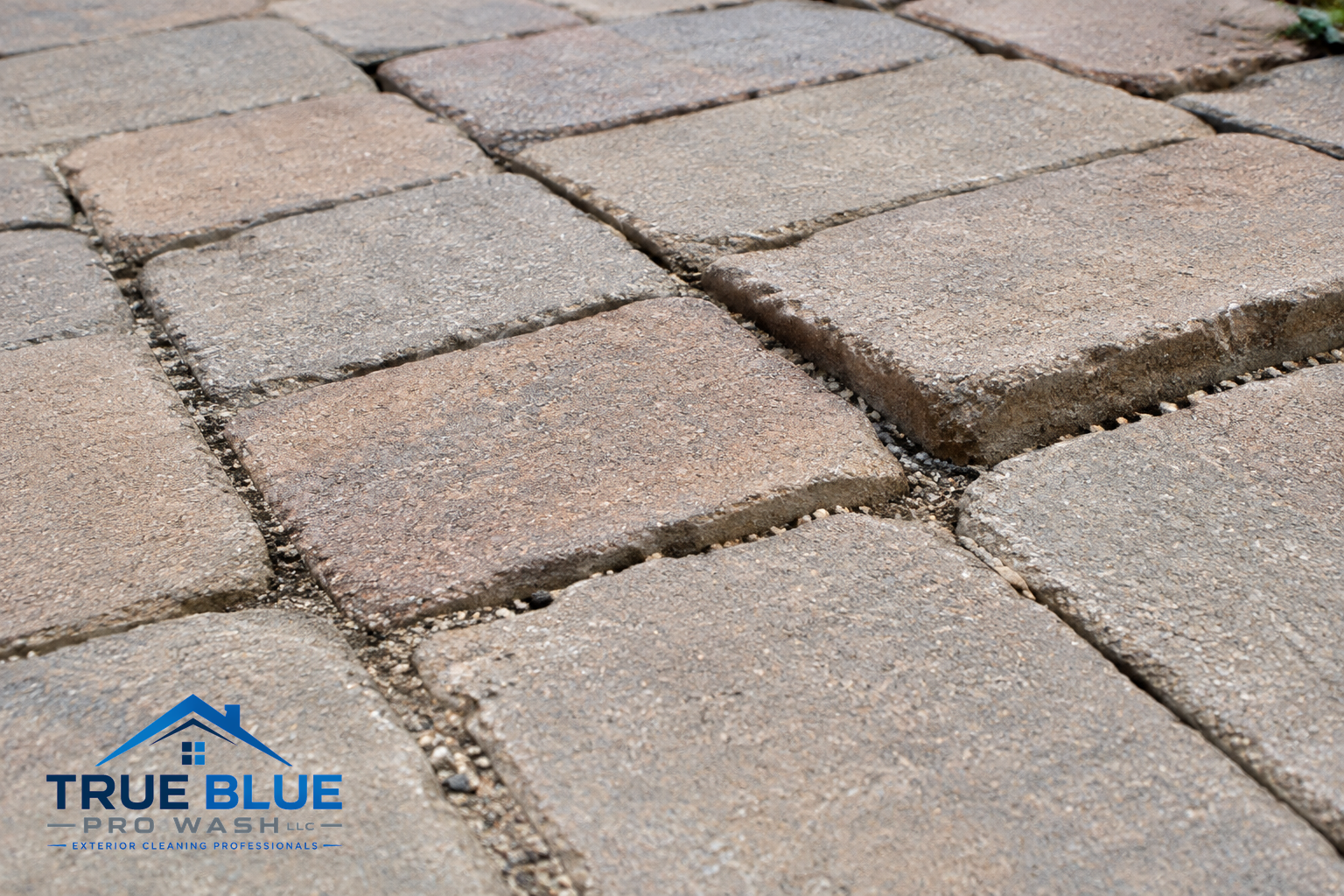
What missing joint material means for your request
Visible gaps between pavers deserve attention before work is agreed. Missing joint material does not, by itself, tell you whether the patio needs repair, joint maintenance or a different sequence of work. Photographs can show the concern, but they cannot establish the condition of the base below.
Do not try to settle the question by pressure-washing a small unstable area. Instead, identify where the joints look depleted and whether nearby stones appear displaced. Ask whether cleaning should wait until a paver professional has assessed those areas.
Do not assume joint-sand replacement, sealing or paver repairs are included in a cleaning request. Confirm separately who will handle any of these tasks.
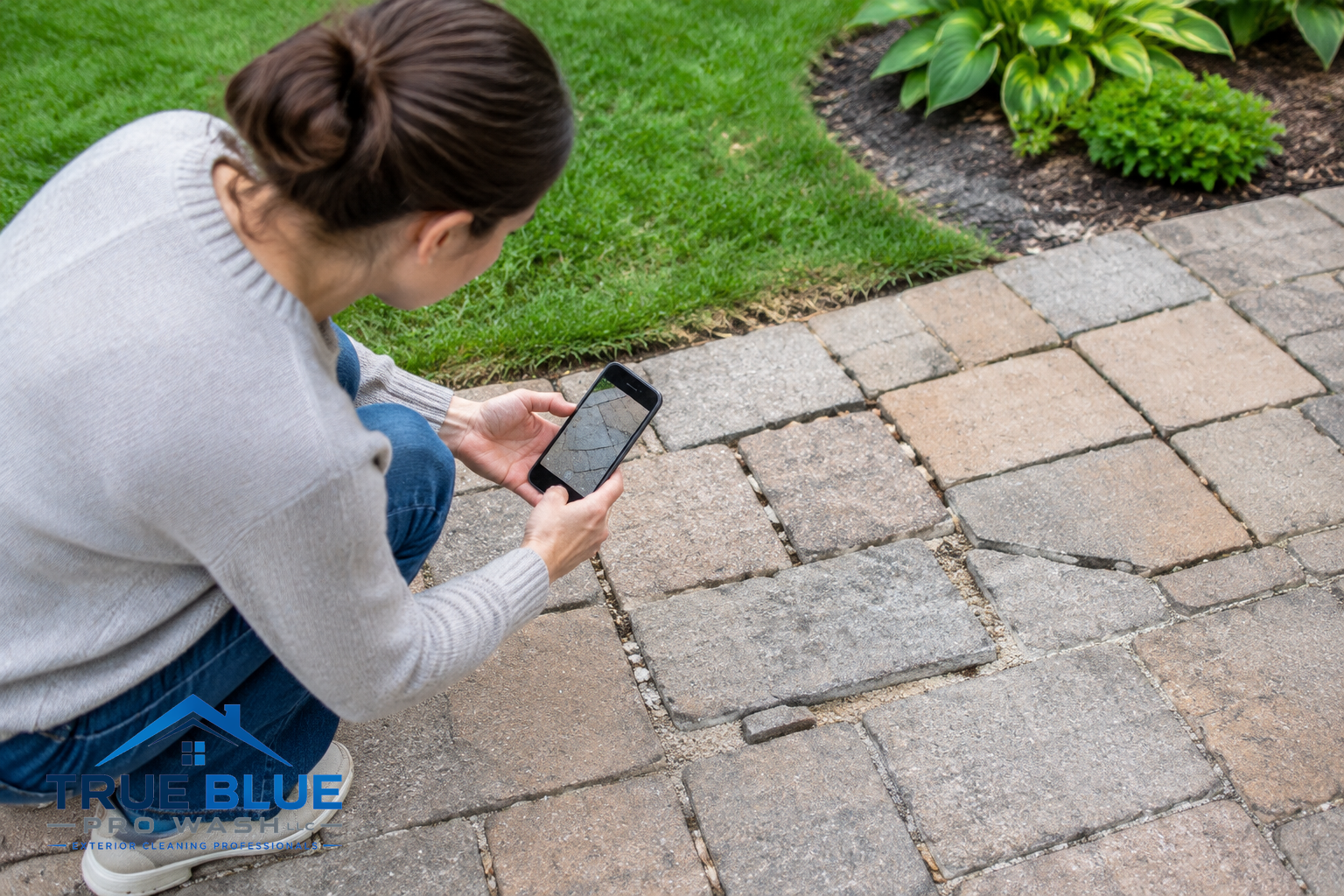
Gather useful details without disturbing the pavers
From a stable position at ground level, take an overall photo of the patio and closer photos of the affected joints, uneven edges or cracked stones. Include enough surrounding surface to show where each concern sits. Avoid moving stones or scraping out joints for a clearer picture.
Note whether the condition is new, has changed over time or was present before you moved in. Mention water collecting in the same area if you have observed it, without guessing at the cause. Share any known previous repairs or sealing, and say when that history is unknown.
Discuss your Newark patio and confirm the scope
Contact True Blue Pro Wash about your Newark property with the photos and a short description of your concerns. Ask whether the cleaning request can be evaluated as it stands or whether a repair assessment should come first.
Before agreeing to work, confirm the cleaning area, any sections to leave untouched, the stains being addressed and any separate work needed in writing. If repairs are recommended, clarify the order of work with the relevant providers rather than assuming cleaning includes restoration.