If you live in Wilmington's Trolley Square (19806), the Highlands, or Westover Hills, you already know what a Mid-Atlantic summer does to a house. By the time August rolls around, north-facing vinyl and fiber cement siding is streaked with green algae, black mildew, and the kind of gray film that makes a ten-year-old home look twenty years older. Pollen blankets everything in April and May, and the freeze-thaw cycles every winter work organic debris deeper into every lap seam and corner trim. The grime is not just cosmetic. Left alone, it shortens the life of your paint and siding.
True Blue Pro Wash serves all of Wilmington, including ZIP codes 19801, 19805, 19806, and 19807, and we use soft washing, not high-pressure blasting, to clean exterior siding safely. Soft washing applies a low-pressure mix of professional-grade surfactants and algaecide that kills mold, algae, and mildew at the root rather than just knocking it off the surface. That means the clean lasts months longer than a straight power wash, and there is zero risk of forcing water behind your siding or stripping paint.
Why Wilmington Homes Get So Dirty So Fast
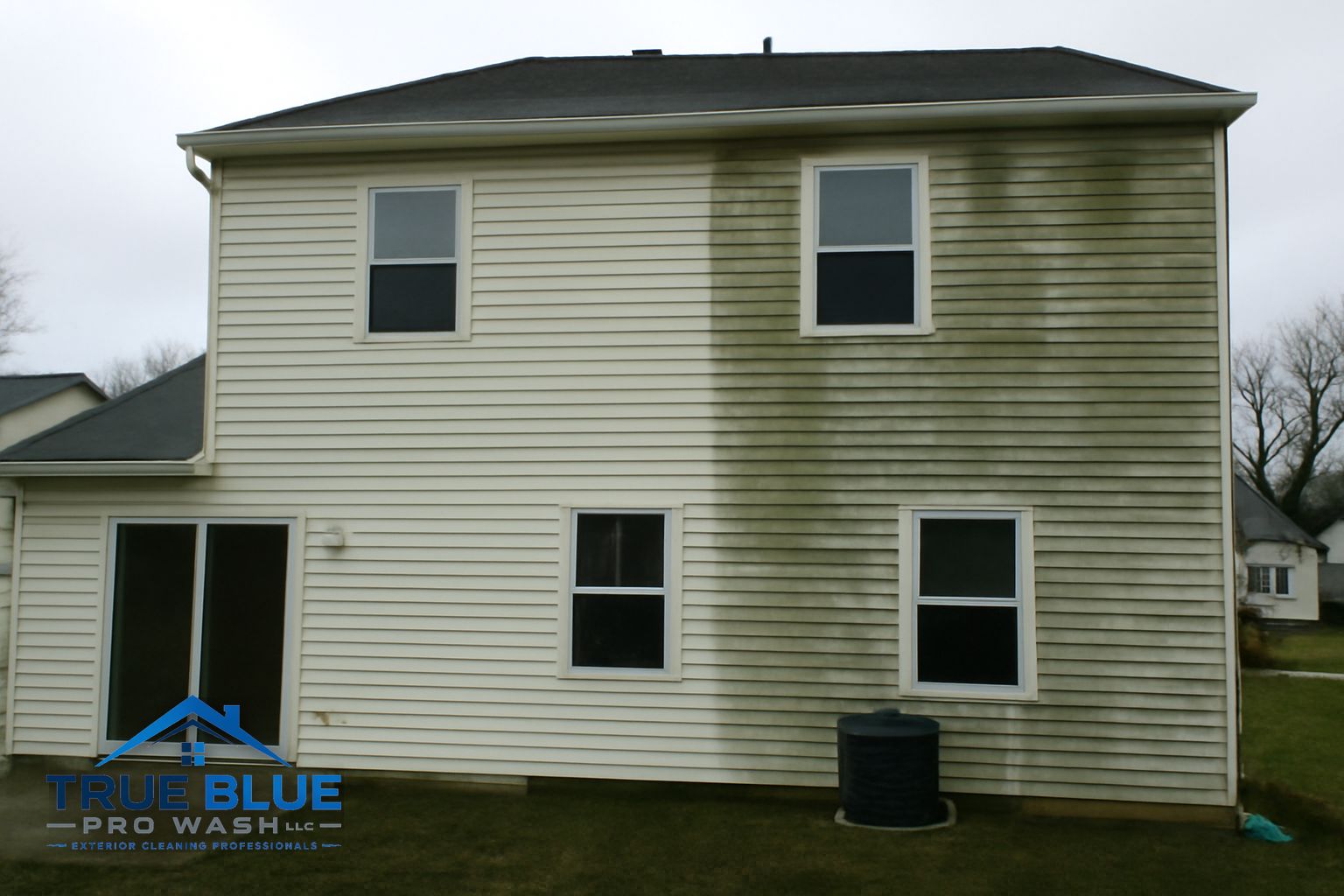
Wilmington sits in a stretch of the Mid-Atlantic that gets genuinely humid summers, with dew points routinely hitting the mid-60s from June through September. That moisture feeds Gloeocapsa magma, the cyanobacteria responsible for the dark streaks you see on roofs and upper siding courses. It also feeds green algae on any surface that gets partial shade, which in older Wilmington neighborhoods like the Highlands and Brandywine Hundred means almost every north or east-facing wall. Combine that with the heavy tree canopy on many Wilmington streets, and you have a recipe for siding that looks neglected even when you are keeping up with everything else.
What Soft Washing Actually Does
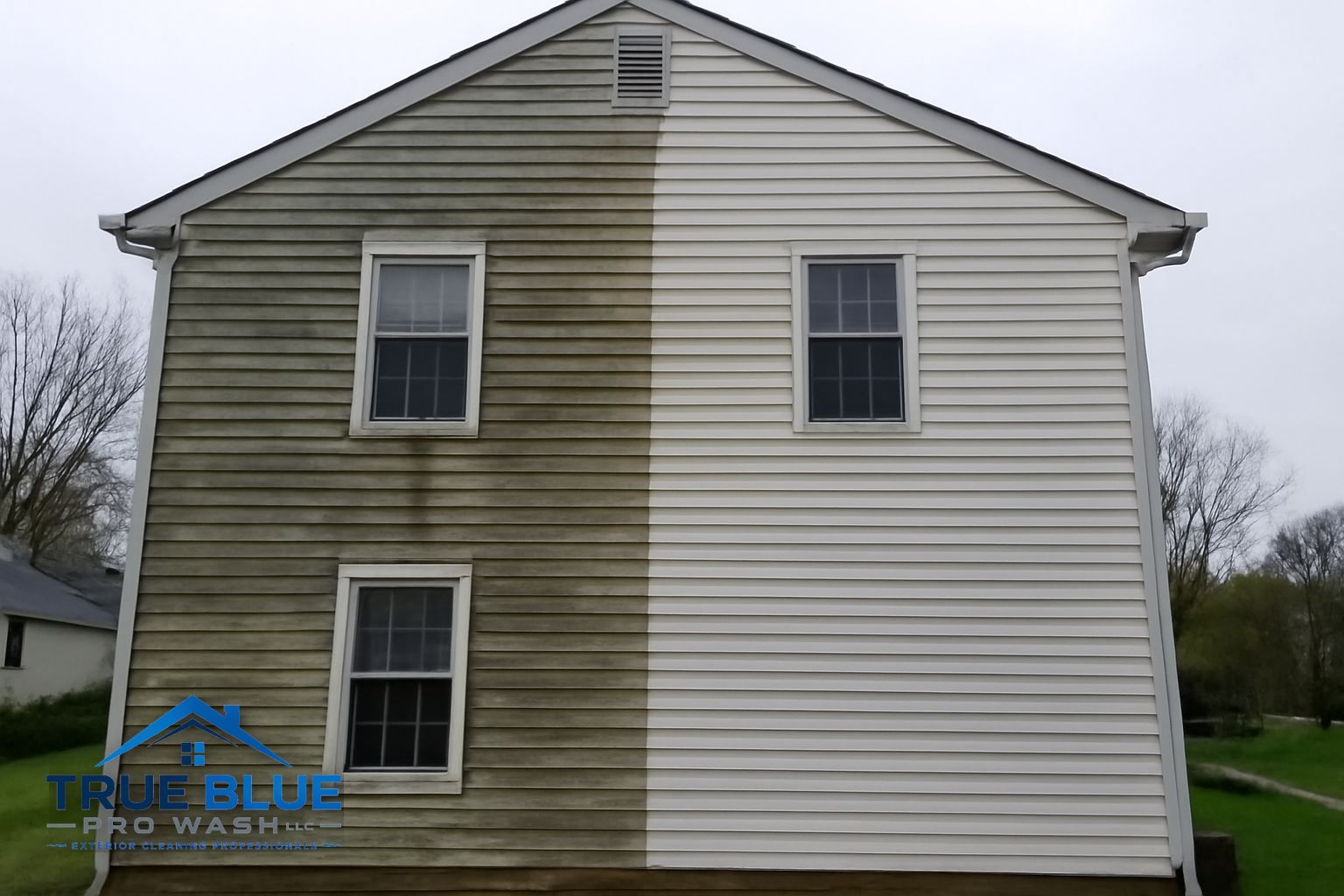
Soft washing is a cleaning method, not just a lower pressure setting. We pre-treat the surface with a biodegradable surfactant blend that loosens dirt and encapsulates organic growth. Then we apply a diluted sodium hypochlorite solution calibrated to the surface type. Vinyl, stucco, EIFS, wood, and painted brick all get different mix ratios. The solution dwells on the surface long enough to kill the biology, then we rinse at low pressure, well below the threshold that would damage caulk joints or push water past window flanges. The result is a house that is genuinely clean, not just wet.
Surfaces We Soft Wash in the Wilmington Area
- Vinyl and aluminum siding on ranchers and colonials in Brandywine Hundred (19810)
- Painted brick and stone on older row homes and twins in 19801 and 19805
- Stucco and EIFS on homes in Westover Hills and Greenville (19807)
- Wood and composite siding on newer construction in Highlands and Trolley Square (19806)
- Painted concrete block and split-face block on garages and additions
- Soffit, fascia, and exposed rafter tails that collect spider webs and road film
Neighborhood Notes: What We See Most Often
In Trolley Square and the Highlands, the homes are older, often built in the 1920s through 1950s, and many have painted brick or stone with wood trim. These surfaces need a careful soft wash approach because the paint has often been on there for decades and high pressure would lift it. We see a lot of black sooty deposits on the upper courses near eaves, which comes from exhaust residue and biological growth mixing together. On the newer vinyl-sided colonials out in Brandywine Hundred near the 19810 zip code, the problem is almost always green algae on the north and west faces combined with oxidation chalking on the south face. Westover Hills homes, many of them large stucco or stone colonials from the mid-century, tend to accumulate dark mildew in mortar joints and under window sills where moisture lingers after rain.
How Long Does a Soft Wash Last in Wilmington?
Most homeowners in Wilmington get one to two years out of a professional soft wash before biological growth returns to a level they notice. Homes with heavy tree canopy, those on north-facing slopes, or those in low-lying areas near Brandywine Creek or the Christina River tend to be on the shorter end of that range because moisture stays on the surface longer. We are honest with customers about this. If your home is in a spot that stays damp, you may want to schedule a wash every twelve to eighteen months rather than every two years. We can tell you after the first visit what to expect based on your specific exposure.
Signs It Is Time to Book a House Wash
- Green or gray-green tint on any siding surface, especially on the north or east side
- Black vertical streaks running down from the eaves or window caps
- A chalky, faded look on south-facing vinyl that dulls the original color
- Dark staining in brick mortar joints or under windowsills
- Visible cobwebs, dirt dauber nests, or wasp residue under soffits
- Your neighbors have had their homes washed and yours suddenly looks shabby by comparison
What to Expect on the Day of Service
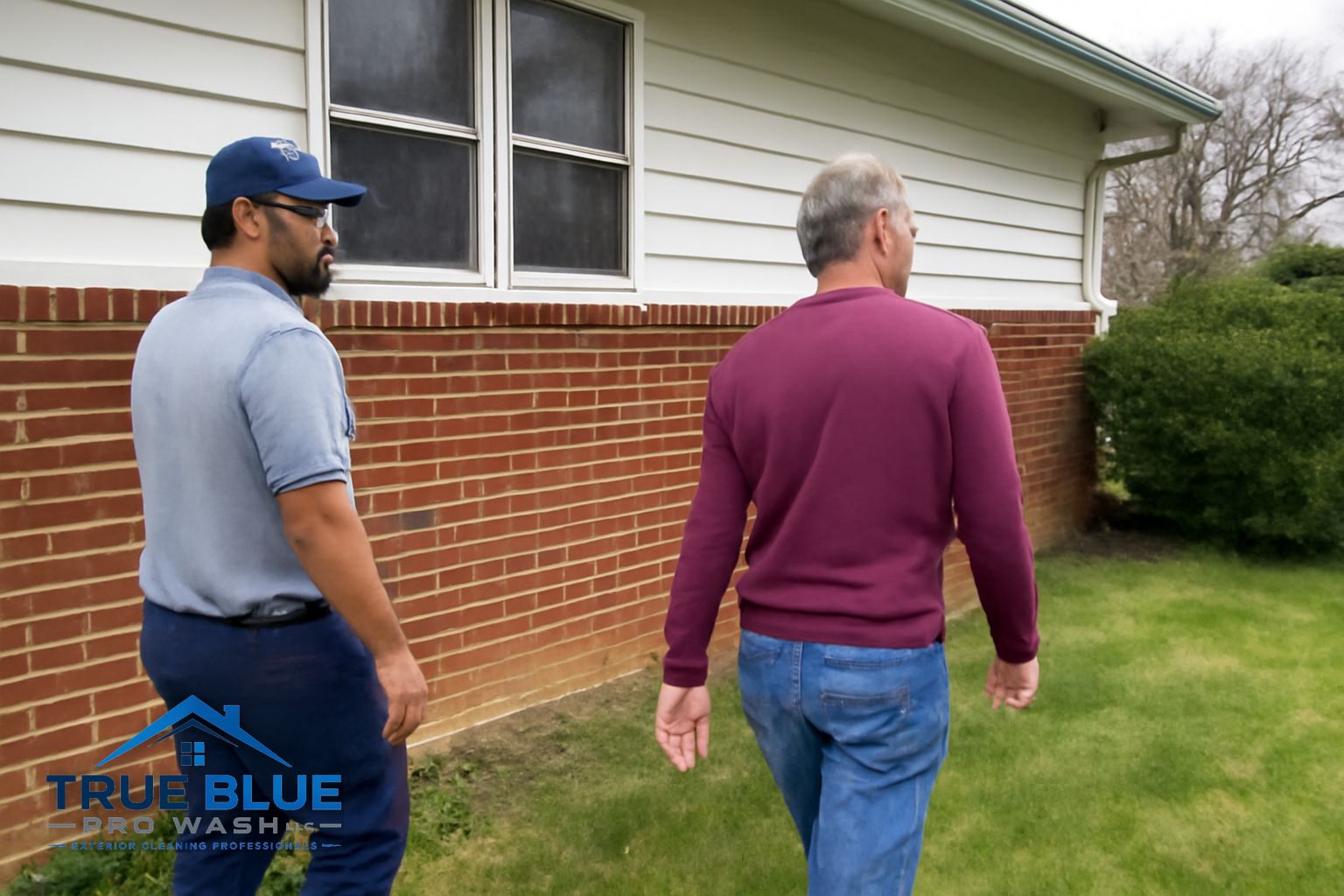
We show up on time and walk the property with you before we start. We close any foundation vents, confirm windows are latched, and move any potted plants or furniture that are right against the foundation. The wash itself typically takes two to four hours for an average Wilmington single-family home, depending on size and how much organic growth is present. We rinse the landscaping before and after to dilute any overspray. When we are done, you will see the difference immediately. The house will not look like we just made it wet. It will look genuinely clean.
Frequently Asked Questions
Is soft washing safe for older painted brick homes in Wilmington?
Yes, when done correctly. We adjust the solution concentration and dwell time based on the surface. For older painted brick in neighborhoods like Trolley Square or the Highlands, we use a lower concentration and shorter dwell, then rinse thoroughly. We do not use high pressure on painted masonry. If paint is already peeling or the brick is spalling, we will point that out before we start.
Will soft washing hurt my landscaping or garden beds?
We pre-rinse all landscaping adjacent to the house before we apply any solution, and we rinse again when we are done. The sodium hypochlorite we use is heavily diluted by the time it reaches the ground, and the additional rinsing dilutes it further. We have washed hundreds of homes in Wilmington and the surrounding area without killing landscaping when these precautions are followed.
How long will it take for my Wilmington home to look dirty again after a soft wash?
Most homes in Wilmington stay clean for twelve to twenty-four months. Homes with heavy shade, lots of tree canopy, or proximity to waterways like Brandywine Creek tend to re-grow algae faster. Homes in more open, sunny locations can go two years or longer. We will give you an honest read after we see your property.
Do I need to be home when you wash the house?
Not necessarily. We ask that someone is available by phone and that windows are closed and latched before we arrive. Many Wilmington customers let us handle the wash while they are at work. We will send a completion photo and follow up with you when we are done.
What is the difference between soft washing and pressure washing for house siding?
Pressure washing relies on physical force to remove dirt. For most siding types, vinyl in particular, that level of force can crack panels, force water behind the cladding, or strip caulk. Soft washing uses chemistry at low pressure to kill and remove organic growth. The result lasts longer, and there is no risk of physical damage. True Blue Pro Wash uses soft washing on all siding surfaces for this reason.
Do you serve all Wilmington ZIP codes?
Yes. We serve 19801, 19802, 19803, 19805, 19806, 19807, and 19810, covering neighborhoods from downtown Wilmington through Brandywine Hundred. We also cover the rest of New Castle County and parts of Southeast Pennsylvania and Southwest New Jersey. Call (302) 757-9755 to confirm service availability at your address.