If you have a decorative fountain on your property in Wilmington, whether it's in front of a Trolley Square townhome, a Highlands estate, or a commercial building near the 19801 corridor, you already know what Delaware summers do to standing water. By June, green algae coats the basin. By July, mineral deposits from our hard water leave white scale rings around the waterline. By August, you've got black biofilm creeping into every crevice. It looks bad, it smells worse, and it can clog your pump if you let it go too long.
True Blue Pro Wash serves Wilmington and all of New Castle County, and fountain cleaning is one of those services that property owners consistently overlook until the problem is obvious. We use low-pressure soft washing techniques paired with biodegradable, surface-safe cleaning solutions to break down algae, calcium scale, iron staining, and organic buildup without cracking decorative stone, damaging pump fittings, or leaving chemical residue that's harmful to birds or pets.
Why Wilmington Fountains Get Dirty So Fast
Delaware's climate is genuinely rough on water features. Wilmington sits in a humid Mid-Atlantic zone where summer temperatures push into the 90s and shade is limited in many front-yard and courtyard settings. Warm, stagnant water is exactly what algae, including the same Gloeocapsa magma strains we fight on roofs, needs to take hold. Add in pollen season from March through May, which dumps heavy organic material into open basins, and you get a cycle of fouling that can start within two to three weeks of a cleaning if you're not using the right algaecide protocol.
North-facing fountains in shaded areas, common in older Westover Hills and Greenville properties, stay damp longer and tend to grow green and black algae faster than sun-exposed installations. We've also seen a lot of iron staining in the 19805 and 19806 zip codes, where older water lines contribute rust-colored mineral deposits to anything that holds water for an extended period.
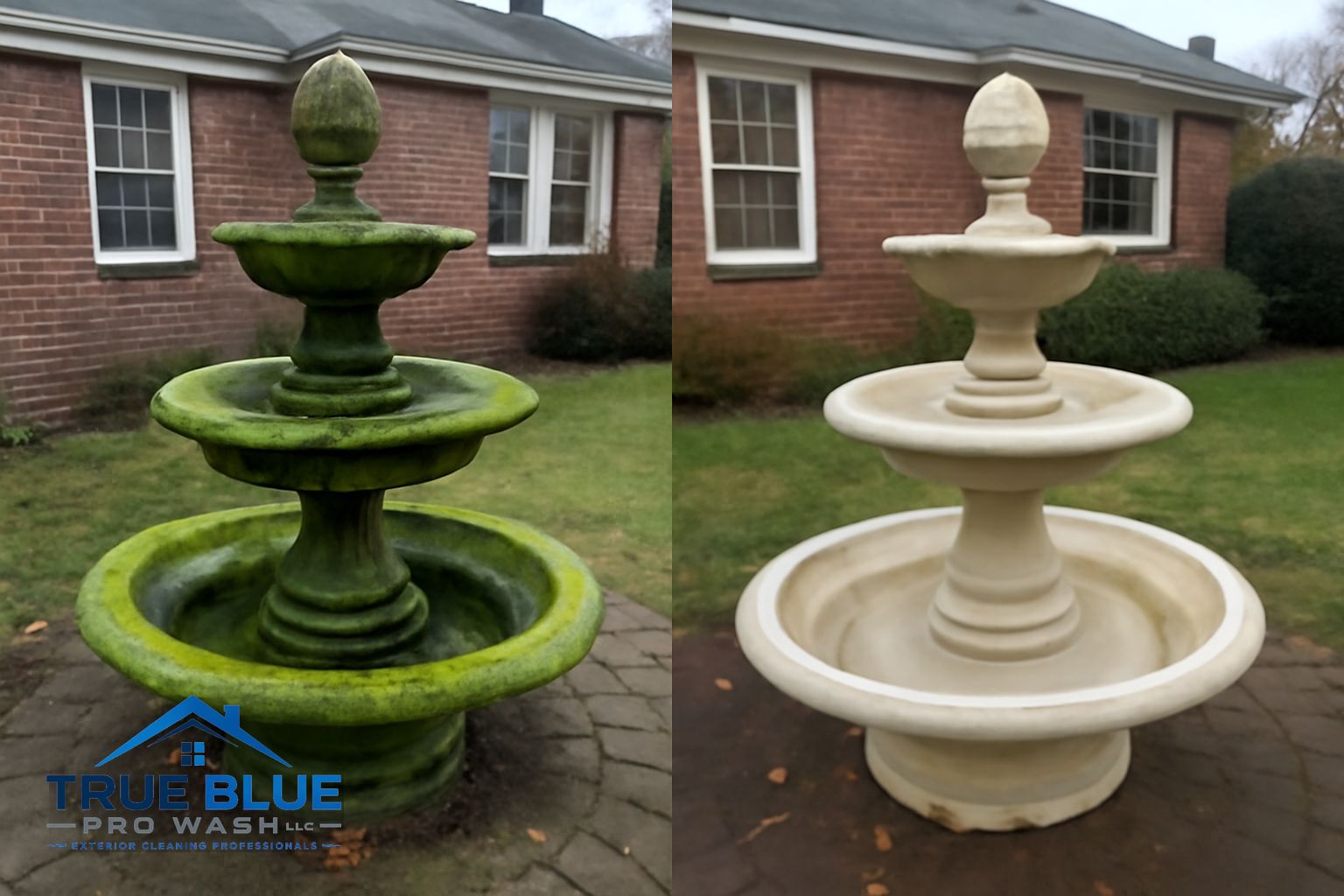
What Our Fountain Cleaning Process Actually Looks Like
We don't just blast water at your fountain and call it done. High-pressure washing alone can chip decorative stone, damage pump housings, and force grime deeper into porous surfaces rather than removing it. Our process is more deliberate than that.
Step-by-Step: How We Clean a Fountain in Wilmington
- Drain and remove standing water so we're working on the actual surface, not washing over the top of existing contamination.
- Pre-treat the basin, bowl, and any decorative tiers with a biodegradable algaecide solution that dwell-kills algae, moss, and biofilm at the root.
- Soft wash the surfaces using controlled low pressure to remove loosened organic material without damaging stone, tile, or mortar joints.
- Treat calcium and mineral scale deposits with an appropriate descaling agent, especially important for fountains in the 19806 and 19807 zip codes where hard water scale builds up heavily.
- Rinse thoroughly, inspect pump inlets and drainage points, and remove any remaining debris from strainers and filters.
- Apply a post-treatment algae inhibitor to slow regrowth, this is what separates a cleaning that lasts a season from one that needs a redo in three weeks.
Residential and Commercial Fountain Cleaning in Wilmington
We clean both residential and commercial water features throughout Wilmington. On the residential side, that means backyard garden fountains, front-entry tiered fountains, and courtyard water features that are common in neighborhoods like the Highlands (19806) and Brandywine Hundred (19810). On the commercial side, we've worked on lobby fountains, entryway water features at office buildings and medical campuses, and courtyard installations at multi-unit properties near downtown Wilmington's 19801 zip code.
For commercial clients, first impressions matter. A green, slimy fountain at the entrance to your building tells visitors something you probably don't want communicated. We can set up recurring maintenance schedules so the fountain is cleaned before it becomes an eyesore, typically every four to eight weeks through the May-to-October season, depending on sun exposure and surrounding tree cover.
What About Fountain Pump and Filter Maintenance?
We're not pump repair technicians, and we'll be straight with you about that. But as part of every fountain cleaning, we clear debris from strainer baskets and pump intake screens, check for obvious blockages, and let you know if we see something that looks like a pump or mechanical issue that needs a specialist's attention. Catching a clogged intake screen before it burns out a pump motor can save you several hundred dollars in replacement costs, so we take a look every time.
Signs Your Wilmington Fountain Needs Cleaning Now
- Green or black slime visible on the basin walls or bottom
- White or orange mineral rings at the waterline
- A musty or swampy odor near the fountain
- Reduced water flow suggesting a partially clogged pump screen
- Visible rust-colored staining from iron in the water supply
- Algae growth on decorative stone tiers or surrounding concrete
Serving All of Wilmington and Surrounding New Castle County
True Blue Pro Wash operates throughout Wilmington's zip codes, 19801, 19805, 19806, 19807, and 19810, and we're out in the field five to six days a week across New Castle County. If you're in Greenville, Trolley Square, Westover Hills, or anywhere in between, we're close by. Fountain cleaning appointments are typically scheduled within a few days of your request during the busy summer season, so reach out before the algae gets any thicker.
Frequently Asked Questions
How often should I have my fountain cleaned in Wilmington?
For most Wilmington properties, every four to six weeks through the active season, roughly May through October, keeps algae and scale under control. Fountains in shaded spots or under heavy tree canopy may need service more frequently, while full-sun installations in open areas can sometimes stretch to eight weeks between cleanings.
Is your fountain cleaning process safe for birds, pets, and plants nearby?
Yes. We use biodegradable, pH-balanced cleaning solutions that are safe for surrounding landscaping and won't harm birds or pets once the area is rinsed and dry. We'll let you know when it's safe to let animals near the fountain again after treatment, usually within 30 to 60 minutes after the final rinse.
Can you remove the orange or rust-colored staining inside my fountain?
In most cases, yes. Orange or rust-colored staining is typically iron from the water supply, which is common in older Wilmington neighborhoods in the 19805 and 19806 zip codes. We treat those stains with a targeted rust remover that's safe for stone and decorative surfaces. Very old or deeply set staining may require more than one treatment.
Do I need to be home when you clean the fountain?
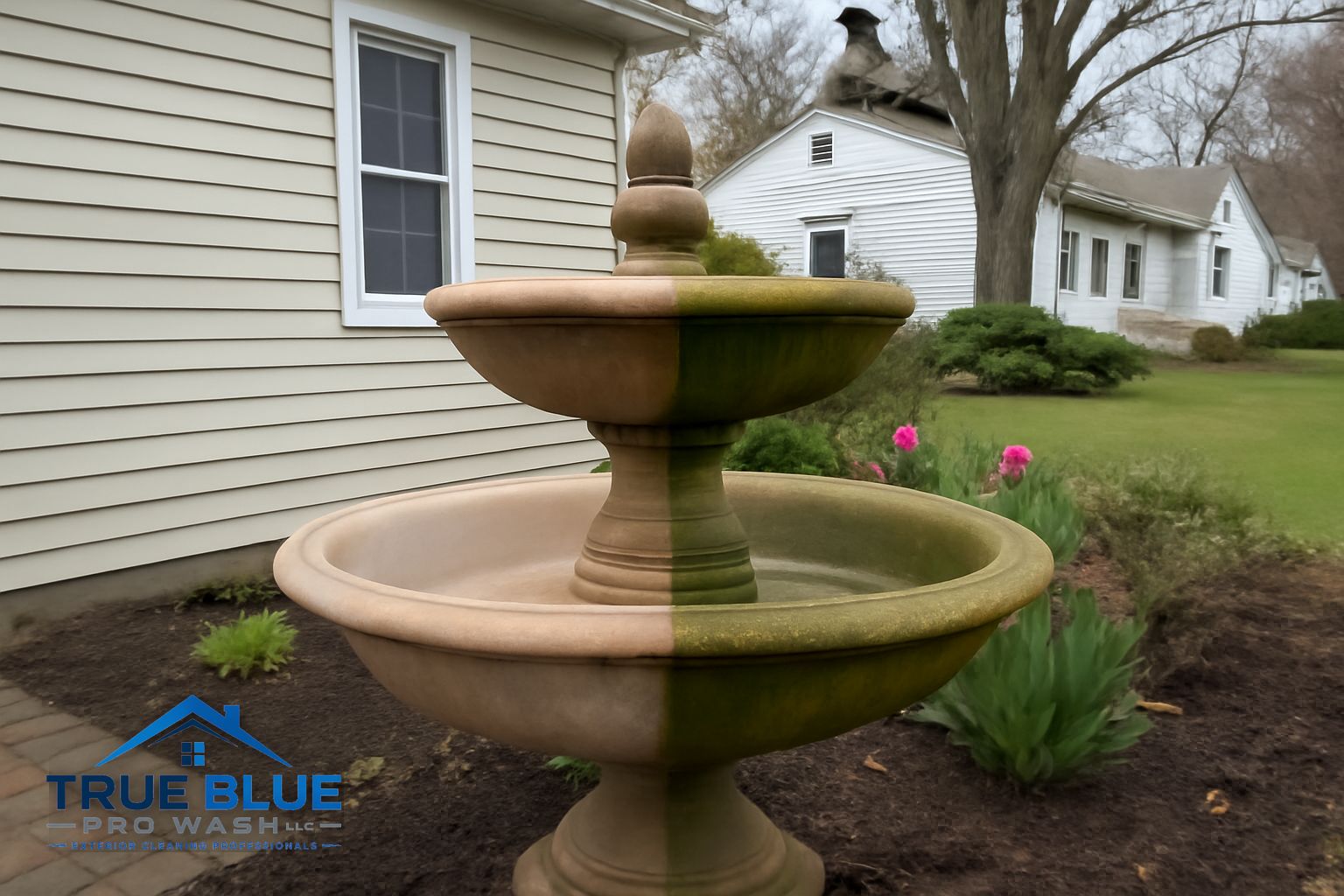
Not necessarily. As long as we have access to the fountain and a nearby water spigot, we can handle the job while you're at work. We'll send you before and after photos and a quick report on anything we noticed during the cleaning, including any pump or mechanical concerns.
What's the difference between fountain cleaning and just hosing it out myself?
A garden hose removes surface debris but doesn't kill algae at the root, dissolve calcium scale, or treat biofilm in the porous surface of decorative stone. Without the right chemistry, algae returns within days. Our soft wash treatment uses a dwell-and-rinse process with algaecide that dramatically slows regrowth compared to a plain water rinse.
Do you offer fountain cleaning for commercial properties in Wilmington?
Yes, and we work with property managers, HOAs, and business owners throughout the 19801 through 19810 zip codes. We can set up a recurring maintenance schedule so your fountain stays clean without you having to think about it. Call us at (302) 757-9755 to discuss a commercial service plan.