If you live in New Castle, DE 19720, you already know what the Mid-Atlantic climate does to hardscaping. From late February through April, pollen blankets every horizontal surface. By July, humidity pushes green algae deep into paver joints along the Delaware River waterfront neighborhoods near Harmony Street and Dutch House Road. Then November through March, the freeze-thaw cycle in New Castle County works moisture into every crack, loosening joint sand and lifting edges. By the time spring arrives, patios and driveways that looked great two seasons ago look like they belong behind a condemned building.
True Blue Pro Wash has been cleaning concrete pavers and natural stone throughout New Castle (19720), Bear, Glasgow, and the surrounding communities for years. We understand that pavers are not the same as plain concrete slabs. High-pressure rinsing alone can blast out polymeric sand, pit the surface, and leave you with a bigger repair bill than the cleaning ever cost. That is why we dial pressure down and let our professional-grade surfactants do the real work, lifting algae, mold, oil, fertilizer stains, and organic discoloration without touching the structural integrity of the joint.
Why New Castle Pavers Get So Dirty So Fast
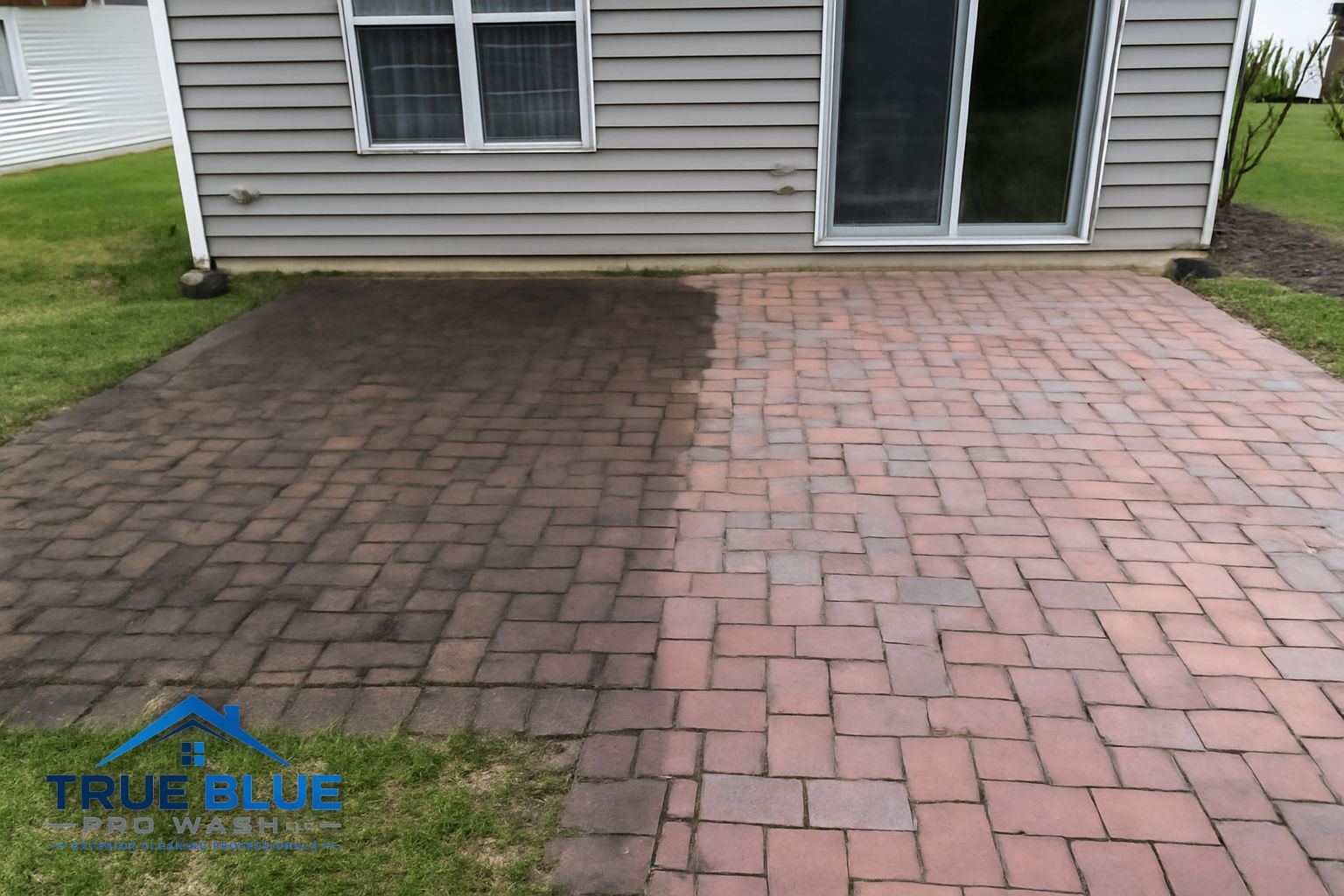
New Castle sits right along the Delaware River, and that proximity keeps relative humidity elevated for most of the year. North-facing patio surfaces in particular almost never fully dry between spring rain events, which means Gloeocapsa magma and green algae take hold fast. Add in the mature tree canopy along many older blocks near Third Street and the Historic District, and you get leaf tannins staining light-colored travertine and concrete pavers brown-black by midsummer. Homeowners in the neighborhoods around Route 9 and Delaware Street tell us the same story: they pressure-washed it themselves last summer, the color came back by October, and now it looks worse than before they started.
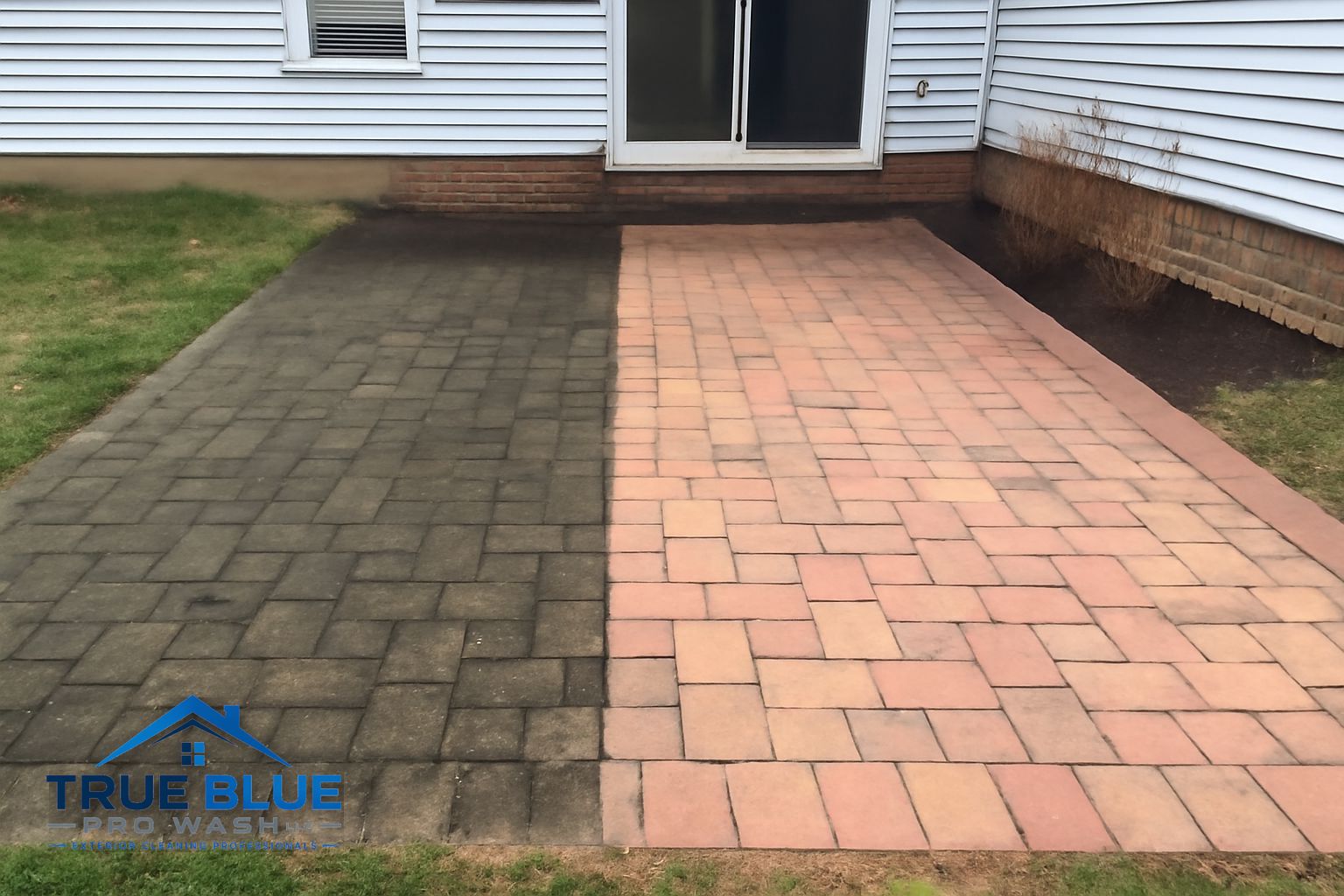
Our Paver Cleaning Process for New Castle Properties
We start with a site walk. Paver type, joint condition, age of the installation, and the nature of the staining all determine the right approach. A new travertine patio off Route 273 near the Glasgow border needs a very different treatment plan than fifty-year-old brick pavers in front of a Colonial-era home in the Historic District. We use biodegradable, low-VOC cleaning solutions applied at low pressure through a surface cleaner or soft-wash nozzle. Dwell time does the work, not brute force.
What We Clean on New Castle Pavers
- Green and black algae in joints and on paver faces
- Pollen and fertilizer staining from spring and fall lawn care
- Leaf tannin discoloration under tree canopies
- Oil and grease drip patterns on driveway pavers
- Efflorescence and calcium deposits on concrete and clay brick pavers
- Rust staining from iron-rich well water or metal furniture legs
- Mildew and black mold on shaded north-facing surfaces
Driveways, Patios, Pool Decks, and Walkways
Most homes in the 19720 zip code have some combination of a paver driveway, a rear patio, and a front walkway. We clean all three in a single visit to keep your scheduling simple. Pool decks with travertine or concrete pavers get extra attention around the coping where splash zones stay wet constantly through summer. If your patio connects to a wood deck, we can handle both surfaces in the same appointment, our deck cleaning service uses a separate low-pressure approach appropriate for composite or pressure-treated wood, and we will not mix the two processes on the same surface.
Should You Seal Pavers After Cleaning?
We get this question on almost every job in New Castle and across the county. Sealing is not required, but it does extend the time between cleanings by reducing the porosity that algae and stains exploit. If you are considering sealing, it should always happen after a professional cleaning, never before, because trapping organic material under a sealer accelerates deterioration. Ask us about our post-clean sealing options when you call for your free estimate.
Signs Your New Castle Pavers Need Professional Cleaning Now
- Joints are dark green, black, or fuzzy with algae or moss growth
- The surface feels slippery underfoot after rain
- Paver color looks uneven or faded in patches
- Brown staining has spread under a tree or downspout
- You can see white powdery efflorescence blooming on the surface
- A DIY pressure wash last season made things worse or stripped joint sand
Serving New Castle, DE and All of New Castle County
From the waterfront blocks near Packet Alley to newer subdivisions off Route 13, True Blue Pro Wash handles paver and concrete cleaning throughout 19720 and the wider New Castle County area. We also serve Bear (19701), Glasgow, Middletown (19709), Newark (19711, 19713), Hockessin (19707), and Wilmington (19801 through 19810). If you are in Southeast Pennsylvania near Chadds Ford or West Chester, we cover those areas too. One call gets you an honest, no-pressure estimate from a crew that actually knows the difference between a clay brick paver and a concrete paver, and treats them accordingly.
Frequently Asked Questions
Will pressure washing damage my pavers in New Castle, DE?
High-pressure washing absolutely can damage pavers, it blasts out polymeric joint sand, pits soft concrete pavers, and strips surface texture from travertine. True Blue Pro Wash uses low-pressure soft washing techniques with professional surfactants so the cleaning chemistry does the work, not brute force. Your joints and paver faces stay intact.
How long does a paver cleaning take for a typical New Castle home?
Most residential paver driveways and patios in the 19720 area take between two and four hours depending on total square footage, staining severity, and the number of surfaces involved. We can usually give you a solid time estimate during the free on-site quote visit.
How often should I have my pavers professionally cleaned in New Castle County?
For most homes in New Castle, DE, once every one to two years is the right interval. North-facing patios or surfaces under heavy tree cover may need annual service because they stay damp longer and collect algae and tannins faster. If you add a sealer after cleaning, you can often stretch that interval to two to three years.
Can you clean pavers that have moss growing in the joints?
Yes. Moss is one of the most common problems we see on shaded paver surfaces throughout New Castle County. Our biodegradable cleaning solutions kill moss at the root so it does not simply grow back in a few weeks the way it does after a plain water rinse. We then carefully clear the loosened material without disturbing the joint structure.
Do you replace joint sand after cleaning?
We do not disturb joint sand during our low-pressure cleaning process. However, if your joints were already depleted before we arrived, we can let you know after the cleaning and recommend a polymeric sand re-jointing service. We are happy to refer you to a reputable hardscape contractor in New Castle County if that work is needed.
What zip codes and neighborhoods in New Castle do you serve?
We serve all of New Castle, DE 19720 including the Historic District along Delaware Street and Third Street, the waterfront area near Packet Alley, and neighborhoods along the Route 9 and Route 13 corridors. We also cover Bear 19701, Glasgow, and the rest of New Castle County. Call (302) 757-9755 to confirm we service your specific address.