If you live anywhere in the Middletown, Odessa, or Townsend corridor, you already know what the Mid-Atlantic climate does to concrete and pavers. The zip codes 19709 covers a lot of newer construction, and those subdivisions off Merrill Drive, the communities around Silver Lake, and the infill streets near Odessa National all share the same problem: pollen and humidity pack into every joint and pore from April through October, green algae colonizes anything that gets partial shade, and then freeze-thaw cycles through November and March pop the surface just enough for staining to set permanently if you wait too long.
True Blue Pro Wash works the MOT area regularly. We know the soil here, we know the clay-heavy grade runoff that turns driveways rust-orange near downspouts, and we know exactly how much pressure a tumbled travertine patio can handle versus a brushed concrete apron or a clay-brick walkway. That knowledge matters, because the wrong nozzle at the wrong pressure can etch a surface in seconds and leave marks that never fully go away.
What Is Happening to Your Hardscape in the MOT Area
Delaware sits in a sweet spot for biological growth. Summers are hot and wet, winters are damp, and there is rarely a long dry stretch that lets outdoor surfaces fully dry out. For concrete driveways, patios, and paved walkways in Middletown and the surrounding area, that means a few very predictable problems show up year after year.
Green Algae and Mildew on Pavers and Concrete
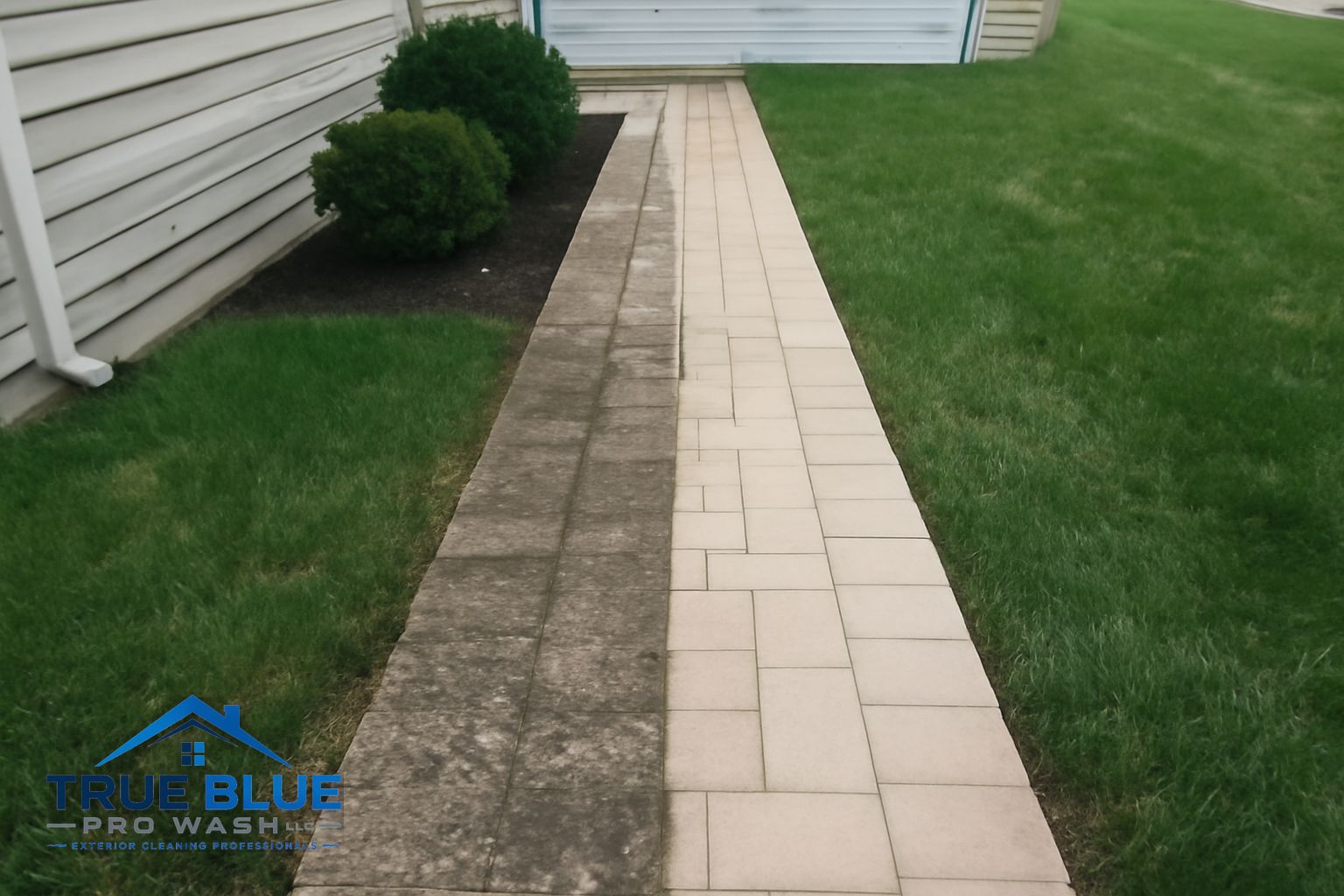
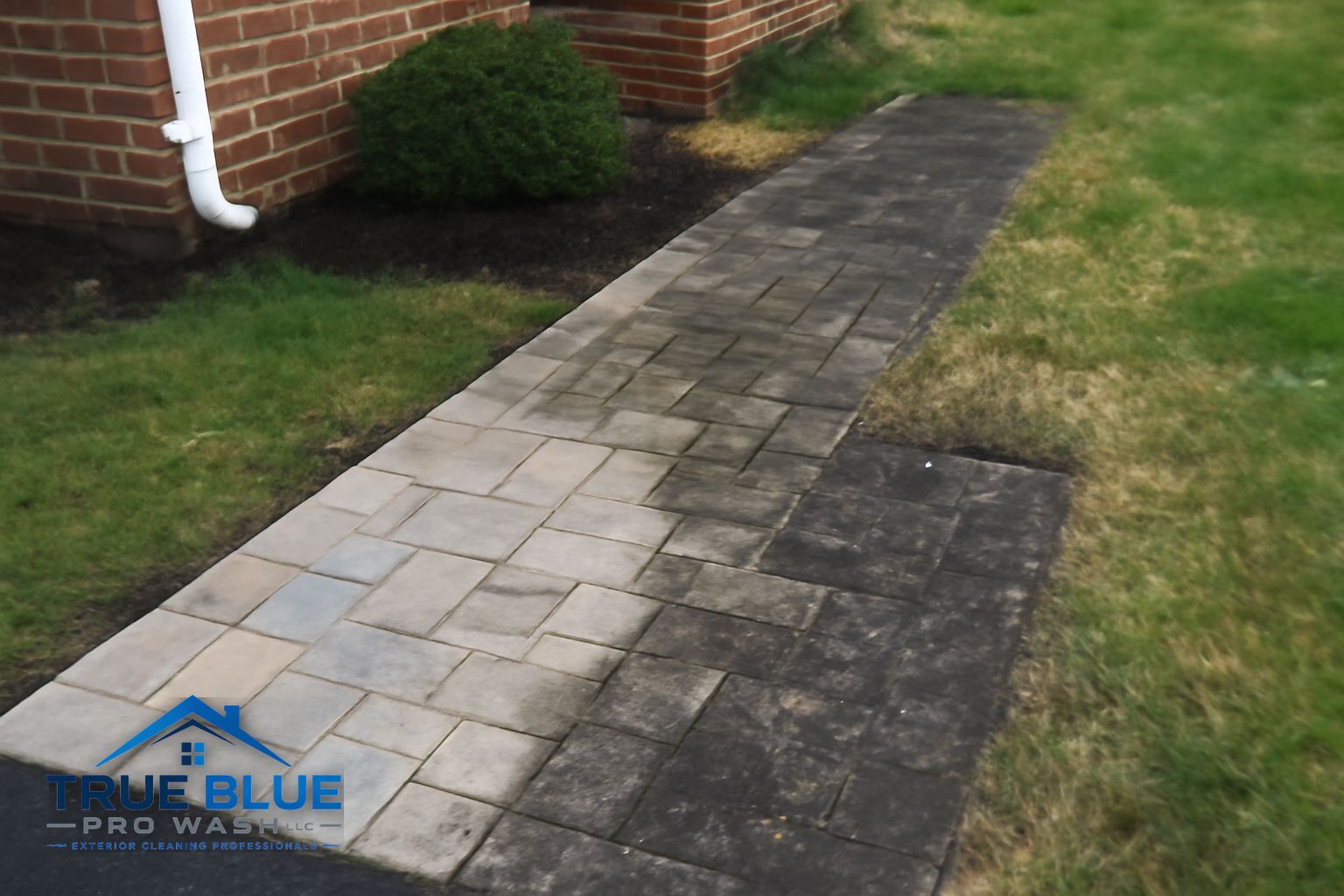
North-facing surfaces and areas under tree canopies stay damp longest. Algae establishes itself in the grout lines first, then spreads across the face of the paver or slab. It looks dark green or gray-green, and it gets slippery fast. This is not just cosmetic. A wet-algae paver path is a genuine slip hazard, especially on the steps and landing areas that many of the newer Middletown homes feature as part of their front entryways.
Black Joint Staining and Organic Buildup
Polymeric sand in paver joints traps organic debris over time. Leaves, seed pods, and general grime break down and stain the joints black. Once that organic matter is embedded, a garden hose will not touch it. You need the right combination of a low-pH pre-treatment and calibrated surface cleaning to lift it without disturbing the joint material itself.
Rust and Clay Staining Near Downspouts
A lot of the lots in Bear and Glasgow that border Middletown, as well as properties around Townsend and Odessa, have ferrous-rich soil. Every time it rains hard, that soil splashes up and leaves orange-brown staining along the edge of a driveway or patio. We treat those areas with an oxalic-based rust remover before the main wash so the stain does not just smear across clean concrete.
Our Concrete and Paver Cleaning Process
We do not show up, blast everything at high pressure, and leave. That approach chips pavers, scours concrete faces, and blows polymeric sand right out of the joints. Here is the step-by-step process we use on MOT-area hardscapes.
Step 1: Surface Inspection and Pre-Treatment
Before we run water on anything, we walk the surface and note the paver type, joint condition, existing staining, and any cracked or heaved sections. We apply a biodegradable pre-treatment solution to areas with heavy biological growth and let it dwell. This softens the algae and mildew so it releases cleanly rather than just getting pushed around.
Step 2: Controlled Surface Washing
We use a surface cleaner attachment rather than an open wand for flat concrete and most paver fields. A surface cleaner keeps pressure uniform across the entire pass, eliminating the tiger-stripe pattern you get when an open wand swings across wet concrete. Pressure is adjusted based on what the material will tolerate. Soft pavers like some manufactured concrete products get treated closer to a soft-wash approach. Dense granite pavers can handle more.
Step 3: Detail Cleaning of Joints and Edges
The edges of driveways, step risers, and wall caps often need hand-wand work. We take the time to clean those transitions rather than leaving a dirty border around a clean field. It is the detail work that makes the finished job look right from the street.
Step 4: Rust and Stain Spot Treatment
Any rust, fertilizer burn, or tannin staining that survives the main wash gets a targeted chemical treatment. We let it react, then rinse. Results depend on how long the stain has been there and how porous the surface is, but this step handles the vast majority of localized discoloration.
Surfaces We Clean in the Middletown Area
- Concrete driveways, aprons, and approach pads
- Concrete and asphalt pathways and walkways
- Brick and concrete paver patios
- Pool surrounds and pool decks
- Tumbled stone and natural flagstone patios
- Front stoops, steps, and entry landings
- Retaining wall faces and cap stones
- Driveway borders and edging pavers
Why Timing Matters in Middletown, Odessa, and Townsend
Late spring and early fall are the two best windows for hardscape cleaning in 19709. In late April and May, pollen season is wrapping up and you can clean what accumulated over the wet spring. In September and October, you are ahead of the leaves and you give the surface time to dry before freeze-thaw season starts. Cleaning in late fall or early spring works too, but surfaces that go into winter already covered in algae are more prone to biological staining that has had months to set.
If you have recently installed new pavers or had concrete poured, the first cleaning is the most important one. New concrete still has surface laitance and residual construction grime, and new pavers settle with joint material that needs a careful first wash to avoid disrupting the polymeric sand bond. We have cleaned dozens of new installations in the MOT area and know exactly how to handle that first job right.
Sealing After Cleaning: What You Should Know
We are often asked whether we seal pavers and concrete after cleaning. True Blue Pro Wash is a cleaning company first. We can refer you to trusted sealant applicators in the area, and we will always tell you honestly whether your surface actually needs sealer or whether consistent annual cleaning is the better value for your situation. A lot of homeowners in Middletown and Townsend are sold on sealers they do not really need. We will give you a straight answer.
Serving the Whole MOT Corridor and Nearby Communities
Our trucks run 19709 routinely. If you are in Middletown proper, out toward Odessa on Route 13, or further south toward Townsend, you are in our regular coverage zone. We also serve Bear (19701) and New Castle (19720) when jobs line up, and we are a quick run north to Wilmington and south toward the Salem County, NJ line when schedules allow. If you are just outside what you think is our range, call us. More often than not we can make it work.
Frequently Asked Questions
How much does paver or concrete cleaning cost in Middletown, DE?
Pricing depends on square footage, surface type, and staining severity. A typical residential driveway or patio in 19709 runs between $150 and $400. Larger hardscape areas with heavy biological growth or rust staining will be toward the higher end. We give free on-site estimates so you know the number before anything starts.
Will pressure washing damage my polymeric sand joints?
It can, if the wrong equipment and technique are used. We use a surface cleaner attachment and appropriate pressure settings that clean the paver face without blasting sand out of the joints. We also avoid directing an open wand straight down into joint lines. Our goal is to restore the surface, not create a repair bill.
How often should I have my pavers or concrete cleaned in the Middletown area?
For most properties in 19709, once a year is the right cadence. If you have heavy tree cover, a north-facing patio, or clay-soil runoff issues, twice a year may make more sense. Annual cleaning keeps biological growth from getting a foothold and makes each cleaning faster and less expensive than letting it go two or three years.
Can you remove the orange rust stains along my driveway edges?
In most cases, yes. We pre-treat rust staining with an oxalic-acid-based solution before the main wash. Results depend on how deeply the stain has set into the concrete or paver surface. Fresh rust stains come out almost completely. Stains that have been there for years may lighten significantly but not disappear entirely. We will tell you what to expect before we start.
Do I need to be home when you clean my driveway or patio?
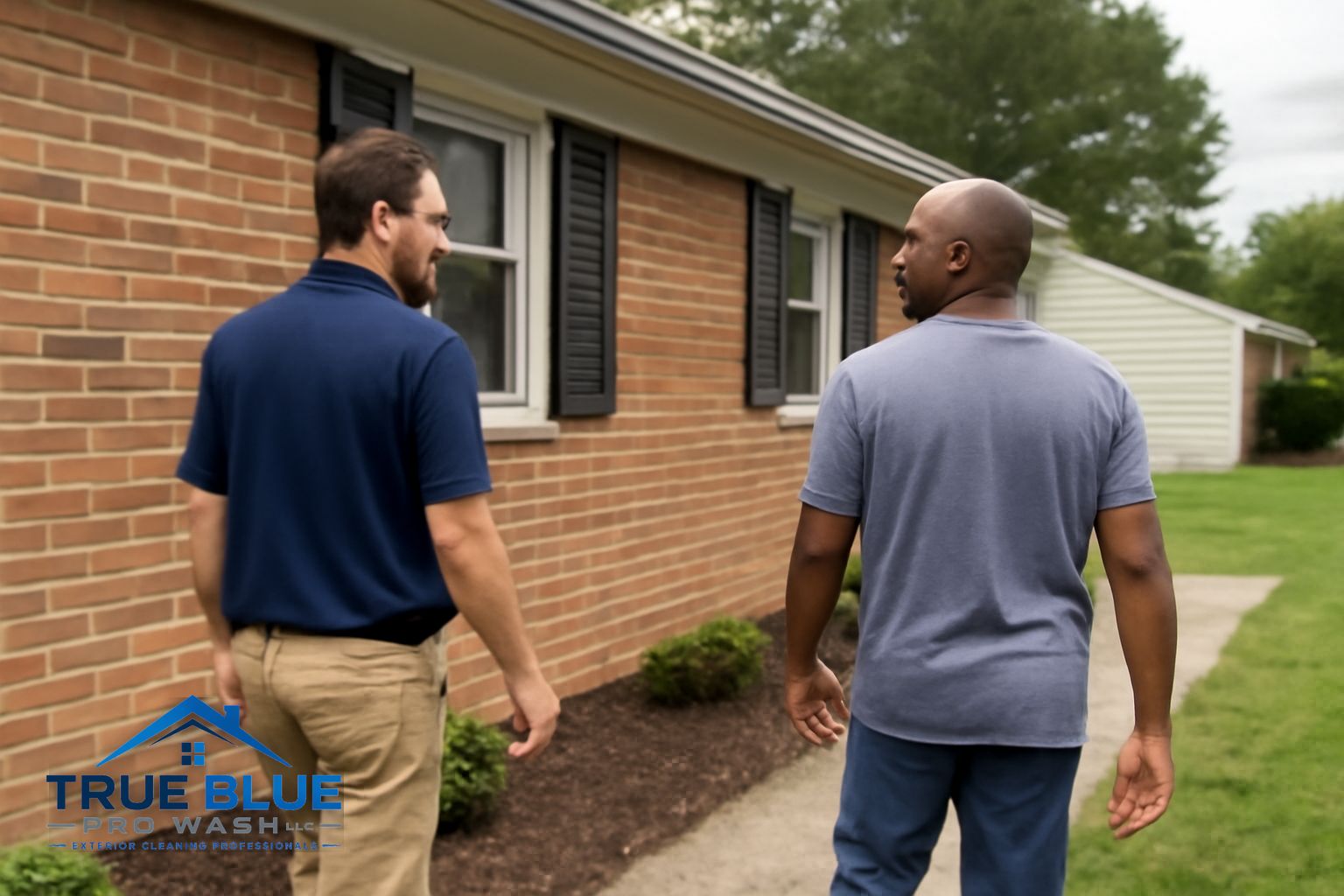
Not necessarily. We do prefer to do a quick walkthrough with you before the job if it is your first time using us, so we can point out any areas of concern and confirm the scope. After that initial visit, a lot of our regular customers just leave the gate unlocked and let us work. We send before and after photos and follow up with any notes.
Is soft washing or pressure washing better for pavers?
It depends on the paver material and the type of soiling. Most paver patios benefit from a lower-pressure approach with a pre-treatment chemical to lift biological growth, followed by a moderate rinse using a surface cleaner. High-pressure open-wand washing is rarely the right tool for pavers. Dense concrete pavers with heavy staining may need more pressure than softer manufactured stone. We assess each surface individually.